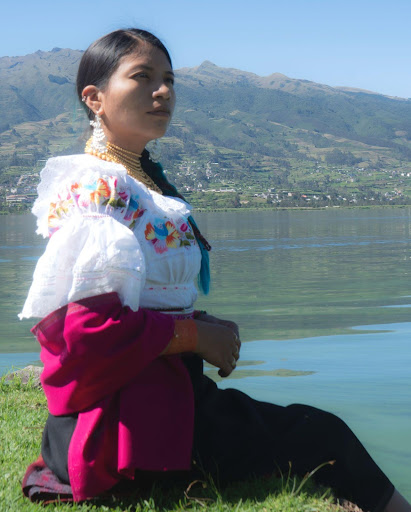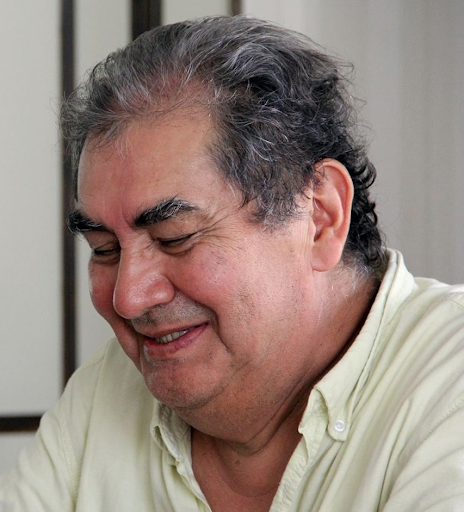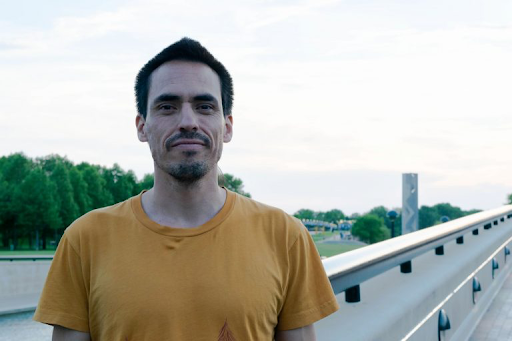
Remembering the Andes in Cherokee Territory.  Byron Tenesaca

The Breedlove Brothers © Byron Tenesaca

Photography and Original Art © Byron Tenesaca 

Interview and Commentary © Juan Guillermo Sánchez Martínez

Translation © Anya Skye Tucker

When living far from the place we are born, it is always heartwarming to encounter a person who, like you, knows the experience of migrating, and remembers similar places to those that we ourselves long for. On June 6th, 2022, we met with Byron Tenesaca, a Kichwa artist and educator, in the Botanical Gardens of Tokiyasdi (Asheville, North Carolina.) While we walked, we recognized some of the plants, making connections with the Andes. Thus it was proposed that we hold an interview about his creative process, among languages, territories, and techniques. The following are some excerpts from the interview. 

Byron Tenesaca is a visual artist and bilingual educator who resides in Western North Carolina. He was born in an ancestral community in the Ecuadorian Andes, to a family of basket weavers and farmers. He was raised there by his grandmother, with whom Byron learned the system of reciprocity that exists between human beings and the mountains. At 11 years old, he journeyed with his grandmother to the United States to live with his biological mother (both of them fundamental in his work). After graduating from Western Carolina University (WCU) in 2015, he was selected for an artistic residency in The Bascom in Highlands, NC. His passion for art and education has brought him to take on roles such asSpanish language interpreter, children’s art teacher, Spanish teacher in secondary school, camp counselor and, most recently, HiSET instructor. Byron has a Master’s degree in Comprehensive Education from Western Carolina University. Recently, Byron was one of the 50 artists selected to be part of the inaugural exposition Appalachia Now! of the Asheville Art Museum. 

 Remendando la Llachapa Vida. (Patching the Llachapa Life) A brief documentary about María Francisca Guamán Morocho (Mami Pancha), an immigrant with a rich Andean heritage who now resides in NC.  © Byron Tenesaca

Juan: I always ask guests to introduce themselves, and to tell us the name of their territory. 

Byron: My name is Byron Tenesaca, I come from a Kichwa-Kañari community in the Andes, from a region that is today the South of Ecuador. I come from a family of weavers, farmers that have preserved tradition through food, and through being in harmony with the environment, dedicating their life to the good living for the future.

Juan: I was looking at your website, and I saw that you work with painting, photography, drawing, and digital design. What is your relationship with art, with creativity? How is it connected to your being, with your life?

Byron: Since I was little I’ve been drawing. When I went along with my mamá-abuela (mother-grandmother) to sell baskets in the city, I remember I collected little drawings, magazines that I found on the ground, or graphics that caught my attention. Then I went home, and on lined paper from my sister’s school, I drew them, I passed them to the paper on the window. I had a collection, already big, of comics. I also grew up tugging my mamá-abuela’s skirt, and when she weaved I was there at her side, always cared for by my mamá-abuela. 

Remendando la Llachapa Vida. (Patching the Llachapa Life) A brief documentary about María Francisca Guamán Morocho (Mami Pancha), an immigrant with a rich Andean heritage who now resides in NC.  © Byron Tenesaca

As children are in many transnational families, Byron was raised by his grandmother in Ecuador and later joined his mother in the United States, who had migrated North earlier. Byron told me that his mother used to send back packages with clothes for her children, games, sometimes important residency documents, and a video cassette…

Byron: And this cassette we put on the TV and we saw a woman talking in the mirror. At that moment, we didn’t know what this really big machine was that she had on her shoulder. She spoke and told us things. My grandma told me: “Look! This is your mama. One day, you are going to see her. Tell her hello!” But in my mind, I watched this video and all I really saw were hands and a really big machine, and in my child’s mind I said:  “Well, my mama is part robot. I have a mom like a robot…” (laughter…)

Between laughter and heaviness, Byron told me how difficult it was to arrive in Turtle Island (North America), a place unknown to a child of 11 who had until-then lived with his mamá-abuela in the Andes. Byron did not first end up in the mountains of North Carolina, but in the piedmont. Soon, the routine of going to school and staying cooped up in the afternoons contrasted with the liberty that he’d grown up with: going to the river to swim and fish. The years passed, and he finished studying at the University of Western Carolina, a great opportunity to meet the mountains again. He had wanted to be a doctor (from the influence of his mother), but soon he was reintroduced to art. 

Byron: Through art, I can learn more of anything, philosophy, math, anything. I began going to exhibitions at the university, and I joined the art program, and I don’t think my mom liked it (laughs…). Painting called to me strongly, and later photography, and from there came design. But I focused more on a dreamworld, and worlds in between here and the reality in which I grew up. Maybe a purpose of photography is that of going and taking pictures and speaking with and meeting different perspectives. 

In this search, now in the last years of university, Byron goes to live further into the mountains and meets some of the members of the Cherokee community.

Byron: I remember in high school, we learned about Native peoples, but it was different, I hadn’t learned about the Cherokee community. So I went and talked with Cherokee friends of my age, and it was interesting that I found more connection with this community than the Latinx or Hispanic community with which I had grown up with. I liked their weaving a lot, because when I saw them I said “it’s as if I was still watching my aunts, my grandma, weaving”. So this curiosity called me to learn a little more about the Cherokee culture. And the more I learned, the more I went back to my childhood. (…) The concept of “latin” and “hispanic” is something new and created here, and I’m not against it because I appreciate how it creates dialogue among organizations, but also it leaves out indigeneity. It’s like building a church on top of a huaca (a sacred Andean place), right? It’s as if we were only here since your country became independent, but if you go further, you learn that no, I am not what they call an “alien” (laughter…). Learning beyond the Aztec, for example, my Kañari culture which goes further than “the Inca,” this gives you more strength. Colonization has erased a lot, but where feet touch the earth, there we belong. 

As we see in Byron Tenesaca’s photography included here, there are series that capture events here in North Carolina (landscape, forests, overlays in Photoshop), but there also are series from the Andean communities of Ecuador. This double gaze of photographer and artist makes this work unique because it comes and goes between the solitary and the community. Thinking of this, I asked Byron: “from the eye of a photographer, how is this experience? Do you feel that the light, or the relationship with the camera, changes by being here or there?

 Andes: Cañar-Azuay © Byron Tenesaca

Byron: Maybe I have a bit more confidence when I feel comfortable there, for the familiarity. Here, what I have photographed is people, who at first are strangers, but after dialoguing with them, if there is the opportunity, I create a type of documentary photography of my experiences. I have also photographed places, above all during the artistic residency in The Bascom in Highlands. (…) And in this solitude, when being in a place so immense, natural, I went to places always documented by tourists, whose photographies have a certain type of light, a certain type of angle, so I went to these places during the rain or when no one was there, or after the rain, or at sunset. It is a different space (…)

Western NC, 2016 © Byron Tenesaca

Byron: There is a series that I call “Human Mounds”. I was reading a little about the mounds here in North Carolina, a mass of dirt, shells, and so many things that Native peoples here used to make these mounds. And this idea stayed with me, because also in these places there were remains of people, so I focused on this, in the human being as organic, as another knot in the fiber of nature, pachamama, so I represented it as a fruit in a fetal position, and I only photographed the back because it has a certain shape that is like an echo of the mountains, and then I overlaid this image in different places. This made me remember where I saw this shape before, why this idea was born, and it is where we call zambos (squash). I was also reminded of my aunt, who had a disability in her body, and my grandma always had to bathe her, as she could not stand up straight but always had to be in this shape (hunched over). So she bathed her, so I remember from an early age this image of the rounded back of my auntie. (laughter)

Human Mounds © Byron Tenesaca

Kay Pacha © Byron Tenesaca

Juan: This exhibition, “Human Mounds” is related to the one titled “Kay Pacha”,  which also has the same shape of the naked body in the fetal position, but now as a drawing.

Byron: Yes, this image goes from photography to drawing and later to printmaking, and I overlay it with the foods I grew up eating, and that are present in our region, creating a type of visual harmony, but also a harmony between the human being and plants. In cultivating your own nutrients, there is reciprocity between the body and the plants and the mountains. From mountains, water is born. There, we cultivate, and it feeds us. We eat a little bit of the mountain, and we transform ourselves into the mountain, and when we die we return again to the mountain (laughter). It is this space of living beings, that is Kay Pacha. 

Juan: From what you are telling me, it is as if the encounter with the Cherokee community, and your exploration through art, has taken you back to the Andes. Do you feel that art has guided you toward remembrance? That the Cherokee territory has opened space for you to remember?

Byron: Yes. I think it is in a line of one of your poems where you say “Andes Apalaches”. Because of this, I stayed here after studying. It reminds me of where I was born, beside a river, together with the mountains (…) And there are many similarities. The more I learn about Indigenous communities from here, it becomes more remarkable the wisdom and the way of life from my childhood (…) Right now, I am learning more about weaving. The project I recently finished was 12 little baskets of paper, with my drawings, and on the base, which is the most important part of any basket, is the portrait of my family, which represents what has kept us together, the women of my family. And on the sides are some drawings of corn, or choclo, how we say it there, and also beans, which we call poroto, and potatoes, and zambo. The rim had to be shown to me by my aunt via Zoom. Really, one learns by seeing, they never tell you like this, like that, so it was hard for my auntie to guide me through the camera: “Grab with your left hand and with this finger, and you have to take it up or behind.” (laughs) it took me about six hours to weave one from paper, and I didn’t like how I’d done it, so I tried it again. And the third time, yes, I finally liked it. And the fourth was the first one completely finished. And now, I can make a basket in two and a half hours.

4 generations of basketweavers © Byron Tenesaca

Juan: Weaving is very present in many of your projects. Sometimes it could be a weaving of lines, sometimes a weaving of materials. And of course, I see that you are weaving a bridge between the Andes and Appalachia. How is this process of weaving for you?

Byron: Weaving is not only art or handicraft, but a moment for reflection, and for creating a space for your own and your family. I realized that here in Cherokee, just like in my family, we weave in community. You don’t weave alone. You are always with your aunts or your mother. And the children are around, playing. Here you create a space for reflection where you talk of ideas that maybe you can’t speak of when you are in other spaces. I was reflecting on how my grandma loaded so many baskets on her back to sell in the city. And how smart she was, going from house to house. The goal was to sell them in the city, but she began selling them as soon as she’d left the house, and when she reached the place she had to sell them, she was left with only one! (laughter) So we bought the essentials: lard, sugar, salt, panela (a block of cane sugar), because the rest we did not need. So I reflect on all of this while I weave, and in the connections with the communities here, after discussing with the Cherokee weavers Mary Thompson and Faye Junaluska.

Juan: I’d like to close this short conversation with a question about the future. How do you see this rebirth of many young people, who like you have grown up in the North but are reconnecting with their peoples? How do you see the future of these exchanges between the South and the North?

Byron: I would say that the future is in the past, as some elders say in some conversations I’ve heard. In order to create a future we must keep the past in mind. Of course things change, but learning from our errors and from the history of the first peoples (…) For instance, something like Indigenous justice. Here in the United States, prisons poison humans instead of healing them. Education that is focused on capitalism also does it. So as a teacher, I have an important role, in some way or another influencing the next generation. (…) Before, the governments held a certain control over our peoples because they couldn’t read, and they had them sign documents and things like that, including the father of my grandma, who was chosen to get some land for having lived all of his life working there, and the day he was going to receive it, the landowner told him to sign some papers because the laws had changed, and he made him sign. He gave him a little money and told him not to come back. Today there is resistance. To fight the system, we need to know about the system (laughter…). I feel optimistic for the changes, but being conscious about where we are. 

Byron ended our chat with the following message against machismo and patriarchal sexism: “The woman always has the role of keeping everything together (…) For this, I thank all of these women, mothers, grandmas, warmis that like the mountain, the Apus, nourish us so that we may continue with a future.” Illuminating with his art and his ancestors, Byron walks and creates today in Tokiyasdi (Asheville, NC) and reminds us of the importance of women: her stitch in the communal fabric and her strength to sustain family. His invitation is to plant from the seed, throw it some soil, compost, water, accompany its process with our hands and intentions, to finally harvest when the cycle closes. So we can see it with our own eyes and appreciate the miracle and the abundance of life on the Earth Mother. 

More about Byron Tenesaca, Cherokee weaving, and the Kichwa community in the United States

●      Sitio web de Byron Tenesaca

●      “Cherokee artists hold family, land and community in handmade baskets”, Rachel Greene. 

●      “Indigenous languages are at risk, but this NY group is doing something about it”, Demi Guo

About the translator

From the Appalachian mountains of North Carolina, Anya Skye Tucker only hopes to learn as much as she can from others. The Andes have been very kind to her. 

Photography and Original Art © Byron Tenesaca ~ ~ Siwar Mayu, September 2022 

Interview and Commentary © Juan Guillermo Sánchez Martínez ~

Translation  © Anya Skye Tucker

4 poets from the Cultural Gathering of Native Women

“Yomoram jyayappapä’is jäyätzame”

Selection © Paul Worley and Carolina Bloem

If you prefer to read this selection as PDF, please CLICK HERE
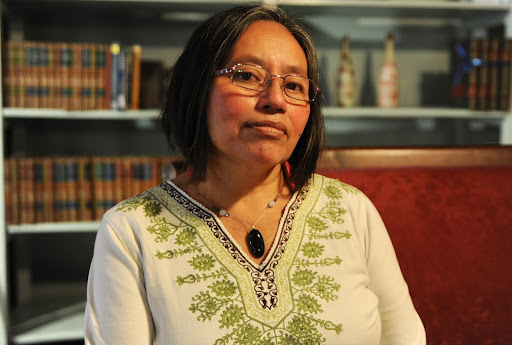
MARY LEAUNA CHRISTENSEN

Inborn

[Published in Denver Quarterly]
The language in me/ is old/ though I feel new to it/ my palate warping/ a metal over flame/ I practice the sounds of animals/ their names/ almost ancestral/ like they know I am trying/ yona (1) / the first word I ever knew/ bear/ some kind of witness/ to a sloppy rebirth/ I have told a lover/ I will name a child/ tsisdu (2) / because it is good/ to be quick & small/ & aware of your surroundings/ I will ink the animal’s likeness/ on the inside of my wrist/ a reminder/ my body cannot be trusted/ to reproduce/ anything/ but words 

  1. yo-na: bear [Cherokee, eastern dialect]
  2. g-stdu: rabbit [Cherokee, eastern dialect]

~~~

Bifurcation 

[Published in Puerto del Sol]

I split/ my tongue/ down the middle/ not like a snake/ but like two rods divining/ taste top 

& bottom lip/ in unison/ find the water there/ the ore/ curse a lover/ & love him to death/ 

I want a little of everything/ heads & tails/ sides & sides/ of two languages/ my mother’s 

tongue/ colonized/ & the tongue of her mother/ chased to mountain side & frozen stream/ 

really my tongue is the ouroboros/ marrying in a wet mouth/ trying to find some infinity/ 

where no words/ nestle under burial mounds 

~~~

In Which I Am a Sum of Parts
[Published in Southern Humanities Review]

2 corn seed necklaces 
hang on the back of my door

along with 2 medicine bags
made of tiny glass seed beads

sterling silver & turquoise 
bolo ties

	(nothing crafted
	by my own hands)

*

Another lesson

my ancestors hid in mountain
caves & confederate uniforms

my many-greats grandfather
was given the English name Nimrod
b/c aren’t we all mighty hunters

& it is likely my blood is altered 
or diluted somewhere in Oklahoma 
b/c not all ancestors were so lucky 
	
        (if that is the term we’re using
	& the fact cannot be ignored—

	I am diluted down to the card 
        in my wallet which states 
        my blood as a percentage)

*

While I was cleaning 

my grandmother’s house

I found a box of tears

*

I was barely a teenager

the first time I remember

visiting the reservation

my grandmother left

decades prior

her brother & brother’s 

wife tried to educate me

commented on my lack—

how that was the first time

I tried & gave up beading—

disillusioned when

the belt I made broke

*

My first lesson     was corn seeds

their grey hard form      imperfectly round

how they were     solid manifestations

of every Cherokee tear     rained

along the trail

*

The scientific name for corn seed

is many syllables but here

we’ll call it Cherokee Tear

it is easy to string onto necklaces

but should not be confused

with seed beads which come

in varying degrees of tiny

plastic & glass 

*

The last time I was on the rez
it was not for an introduction
but a burial

& I bought beads in colors 
I found comforting

along with needles

thin strips of leather

waxy manmade sinew

*

Tears do not equate mourning 

but I take the pad of my finger 

press against a duct & hope 

to find some hard blockage

induce a kind of birth

~~~

WATCH HERE THE RECORDINGS OF THE GATHERING

KIMBERLY L. BECKER

Helianthus

On my way to you 
I pass a field full of sun,  
gold on gold,
and remember your saying
you are descended
from Mayans

Sun/sun dance

I grasp at happiness 
as if for bright coin
from a well for wishing
You tell me instead to hope 
and say to follow the sun
like these flowers in lambent light

~~~

Heimweh

I am far from 
mound and mountain
              On these Northern Plains
the wind never ceases,
susurration like the ocean
Astonishment at pelicans
white, not the brown ones last seen 
               over Atlantic waves
Dissonance of familiarity
in strange place 
               Light insinuates late, aubades early
Wait til winter, you warn me
I learn new language 
for this landscape: coulee and kettles
badlands buttes and bluffs
              An eagle dives for prey
grander than ever imagined
Bison trundle over earth
A lone horse stands backlit on a rise
My mouth tries to form the word
for horse in your language: xaawaarúxti’
              but I still face East to sing 
my morning song in Cherokee
On dusty road framed by primrose
I find three yellow stones
tiny jewels of sun I pass on to my son
before his flight Northeast
               Pelican in pond extends enormous wings 
as if to put on coat or cast off cape,
or rather, as if measuring span 
between its existence 	and my insistence
               on not entirely imagined kinship
both of us between homes
and on the way 
                                 to somewhere else

~~~

Ventus

This wind whittles down to essential form
Riderless horses returned from Little Big Horn 

Always we are pulled towards the idea of home
Water and wind form cannonballs of stone

We trade words of greeting: NAheesa atistit/osd sunalei
Wind loosens our hair, growing out after grief

Shame burns like flares on the Bakken 
Wind tosses flames like horses’ manes

In Germany, sirocco from Spain a soft caress
Distances deceive in this vast space 

Palms almost touching, energy palpable 
To track Aurora, I download an app,

imagine us lying magnetized under neon skies
You say the Missouri is called the Great Mystery

I introduce myself as I would to any person
You point out strong current’s direction

under what I perceived as only swirling surface 
We remember flooding of ancestral 

homelands, dams built to harness force
while river and wind keep adjusting course

KARLA CORDERO

ABUELA IS A MACHETE WRAPPED IN HER FAVORITE APRON

a man once slammed a fruit bowl against the kitchen wall & abuela learned how glass can give birth to small daggers. she replaced her husband for knives. holds a blade like a loaded gun. enjoys the chop of cilantro-bundles for caldo & people swear she got lawnmowers for fingers. in the backyard the trees shed fruit-baskets but abuela dislikes the rind. can scalp a pear’s skin in seconds. clean. you can see the sugar bleed off the slice. each hand a steady butcher. never once nicked a thumb. & for thirty years pierced meat. sliced basil. stripped salmon of its glittered-gills. then dr. gonzalez found her memory had carved itself pieces. she was handed plastic flatware. all her metal went dull. the good utensils for steak hidden. the house keys now chained to her apron & sometimes her mouth switchblades when the keys go missing. today at the grocery store i tell her stories about the palms she owns. how they once tricked a carrot to dance like bright confetti & abuela picks a fresh pear. the heavy end cleansed by the fog of her breath. she swears she’s always loved the fruit’s pale flesh. & her teeth a wooden drawer of machetes.

~~~

ALLISON HEDGE COKE

DRUNK BUTTERFLIES

Butterflies inebriated, sloshed

spiraling upward from pools of water

holding fermented foliage we

passed by while canoeing on the Neuse.

Orange, white, yellow, blue, black, brown

speckled, swallow-tailed, patterned,

mottled, webbed flash and quiver,

fluttering fine, fly, pit painted lady mating ritual. 

Wrapping shyness with wing, undercover, under

folding blanket over lover. 

Liquid courage emboldens beginnings, above

happenstance provision, easy prey for

prowling bird, turtle, fish, crawdad, frog. 

The beauty of it all

in sunlightened wing shining, falling forward and 

back, up and down. Frenzy fantastic

color gentle, feathered wing too delicate to touch

without removing glide barb. Metamorphosed

just for this day

a metaphor, relational, 

for all that is good and will be. 

Butterfly girl wraps her hair into braided wing

flaps for future. Turns herself 

into  the softest touch, lifting and rising

everything around her, all that is good—

this is good— 

something they do so much

better than Human Beings

in natural accordance with traditional way

of the butterfly creation racing, 

occurring in this way, for her and for those following her.

Kama, kamama. Catch her

in the morning and

again at night, at midday she just floats by breezing.

~~~

MEASURING UP 

It wasn’t socks missing from his feet, 

not elbow cloth unraveled unilaterally, 

not equal displacement of chin and brow, 

nor the eye that sat a bit lower on the right, it was his knuckle that made me weep, 

clove corners gone wayside, like miniscule meat  hooks clawed away bits of him each shift he made, invisible a timeliness unfurled. It was his muscle torn through, festering, the prosthetic hand, finger width dismay all across his attempted grin, left  there just like that, for anyone to see—it was his mercy. In the end we’re rarely beautiful, mostly placed  away from compromising situations into poses offsetting what has become of us in some gawker’s  unnerving eyes. Yet, he was, is, still here in mine, and I’m human because of it. Maybe only. Maybe.

~~~

PANDO/PANDO 

The Trembling Giant Aspen / Bolivian massacre site 

Trembling giant  
 bulging under siege 
Pando 
 /Pando 

waving I spread 
 banned from streets 
perpendicular to leaf blade 
Pando/ 
 Pando
 
 havoc, natural gas 
petiole flattened 
 opposition pushing right autonomy 
rush, lift, breaking cover, tremble 
 on the fourth day of 
yellow-white-grayish-yellow 
Pando/Pando 

 hunger strike, assailants 
 lobbed a green grenade 
 forced to knees shirtless 
 peasantry 
tree 
Pando 
 /Pando
Pando/ 
 Pando 
aspen man spreads uprising 
flowering, flower, 
spreading root sprout 
Pando 
 ambush 
 where Morales has stayed 
biomass clone cross giant uprising  deeply rooted Indigenous 
growth  prevent Bolivia from splintering apart Pando/Pando 

 visiting Santa Cruz 
one hundred acres 
 dynamite blasts 
fourteen million pounds 
 public humiliation 
Pando/Pando 

rooted eighty thousand years 
 fifty Indigenous mayors rooted  thirty Andeans killed this 
week  paralyzed borders  
 Argentina, Brazil, Paraguay 
Pando/Pando  
clonal colony 
 colonial massacre 
singular genetic individual 
 Morales, an Aymara Indian, Pando/Pando 
 organized opposition, university  student conservatives, forced 
terrified   Indigenous people, to their knees  forced refugee people 
to 
 apologize for coming to Sucre  forced chanted insults to their hero 
Evo  then conservatives set fire 
 to blue, black, white Aymara flag  seized hand-woven Aymara 
ponchos  Aymara people 
Pando/Pando 

Pando/Pando 
rhizome, basal shoot 
 shot, seven dead 
shooting—genet/ramet 
 peasant farmers 

organism overtaking 
 not supported by current evidence 
Fishlake quaking  
 Amazon  
 Pando 
aspen life in largest 
 singular germination 
Pando/Pando 
 Pando/Pando 
Pando/Pando 
 Pando/Pando 
Pando/Pando
 Pando/Pando Pando/Pando

~~~

 WE WERE IN A WORLD 
We were in a world, in a world. Sure we had our glyphs, but we were providential. Once, some alphabet believ ers, glass purveyors, Ursus Arctos killers, sent all bailiwick on cursed  course far faster gyration backspin, birling intrinsic angular momen tum—boson melts. Spinning, it careened away iceberg, iceberg, ice berg; glacier braced time traced yesterday unshakable base—all below  flushed alluvion torrent, Niagara pour, special spate, flux, flow, until  their coastal citadels moldered from cyclone, tsunami, hurricane gale.  Tornadoes tossed turf wherever they pleased. Eruptions molded Her  back into something She deemed worthy. Not to mention quakes. And  the people, the people, the People, pushed into cataclysm, a few generations from alphabet book imposed catechism, soon were calamity  tragedy storm splinters, fragmented particles of real past, in a world  gone away from oratory, song, oraliteratures, orations into gyrations  reeling. Soon hot, hot, hot, hot, hot, hot, hot, hot, hot. Hot, dying  mangroves, disappearing Waimea Bay, dengue fever, butterfly range  shift, meadow gone forest, desert sprung savannah, caribou, black  guillemots, bats, frogs, snails—gone. What will sandhill cranes crave?  Winged lay early. Reefs bleach. Rain, rain, rain, rain, rain, rain, rain,  snow, snow, snow, fires flaming fiercely, fascinated in their own re flecting glare. Marmots rise early. Mosquitoes endure longer, lasting  biting spreading West Nile. Polar bears quit bearing. Robins, swal lows, enter Inuit life. Thunder finds Iñupiat. Here, it is said, glyphs  left rock wall, stone plates, bark, branch, leapt animated into being,  shook shoulders, straightened story, lifted world upon their wing  bone, soared into Night, to place World back into socket eased sky— stilled us. Some say the soup leftover was worded with decolonized  language. Some say the taste lingers even now.

More about the poets in this selection 

More about the translators

Carolina Bloem teaches Latin American Studies and Spanish at Salt Lake Community College. Her research focuses on present-day Wayuu oraliture and its impact both in local and international communities. Past research interests include travel writing in 19th-Century Colombia and Venezuela, and conduct manuals and their biopolitical role in society.

Paul M. Worley is a settler scholar from Charleston, SC. He is Professor of Spanish at Appalachian State University, where he serves as Chair of the Department of Languages, Literatures, and Cultures. Co-written with Rita M. Palacios, his most recent book, Unwriting Maya Literature: Ts’íib as Recorded Knowledge (2019), was given an honorable mention for Best Book in the Humanities by LASA’s Mexico Section. He is also the author of Telling and Being Told: Storytelling and Cultural Control in Contemporary Yucatec Maya Literatures (2013; oral performances recorded as part of this book project are available at tsikbalichmaya.org), and a Fulbright Scholar. Together with Melissa D. Birkhofer, he is co-translator of Miguel Rocha Vivas’s Word Mingas (2021), whose Spanish edition won Cuba’s Casa de las Américas Prize in 2016. He has also translated selected works by Indigenous authors such as Hubert Matiúwàa (Mè’phàà), Celerina Sánchez, Manuel Tzoc (K’iche’), and Ruperta Bautista (Tsotsil).

4 poets from the Cultural Gathering of Native Women “Yomoram jyayappapä’is jäyätzame” © Paul Worley and Carolina Bloem ~ Siwar Mayu, September 2022

Myths, rites, and petroglyphs on the río Caquetá. Fernando Urbina Rangel

Photographs and Original Poems © Fernando Urbina Rangel

Selections and Introduction © Juan G. Sánchez Martínez

English Translation © Lorrie Lowenfield Jayne

If you prefer to read this as PDF, click here

Fernando Urbina Rangel is a philosopher, poet, photographer, and educator. For decades he has worked at the Universidad Nacional de Colombia where he has conducted classes, seminars  and research regarding  comparative mythology, orality, rock art,  Amazonian petroglyphs, and ceremonial  plants.  Urbina has authored ninety-five academic articles, eight books, twenty-five individual photography exhibits, two educational television series, and two radio series. Today, books such as Las hojas del poder (Leaves of Power)(1992), Dïïjoma, El hombre serpiente águila (The Serpent Eagle Man) (2004) have become classics in Amazonian literature.  Sown with mambe (coca powder mixed with yarumo ashes) and ambil (tobacco paste mixed with vegetal salt), and based  in the art of picto-poetry, rock painting, and rafue (powerful speech for the Murui-Muina) these works were visionary publications that wove image, poetry, essay, and ancient stories, destabilizing the urban word-centered hierarchies of Colombian universities. In Urbina’s work, the book is the coca tree,  the elders Don José García y Doña Filomena Tejada are the library,  and the university is the ritual dances and the mambeadero (the place where men sit to share mambe and words). Fernando Urbina speaks with La Gente de Centro, the People from the Center (Múrui, Okaina, Nonuya, Bora, Miraña, Muinane, Resígaro and Andoque), children of the tobacco, the coca, the sweet yuca, whose original territory is found in the interfluvial  Caquetá-Putumayo region (Colombia). These people have survived the Casa Arana genocide and continue to resist the siege of the petroleum industry, mining companies, narcotraffickers and Colombian Civil War. 

Fortunately, the vitality with which Fernando Urbina’s books retrieve the word, gesture, and rites of the Gente de Centro, and celebrate them in philosophy, poetry and art, has cleared pathways for the textualities and oralitures of Abiayala’s peoples. His interdisciplinary work recalls that for many generations on the Caqueta river, and still today, there are stone-books beneath the water, petroglyphs that emerge when the floodwaters recede to tell the original stories. His work also recognizes that “myth is the word revealed”, neither chimera nor anachronism, but instead, the present that sustains us and “in which one must suspend and linger”(Las hojas del poder).  

The photographs and texts that make up the video below are part of Urbina’s work, MÁS ALLÁ DE LAS MONTAÑAS DE UYUMBE (BEYOND the MOUNTAINS of UYUMBE)(“San Agustín”), sponsored and exhibited by ICANH in 2019 (Universidad Nacional) during the celebration of the one hundred and fiftieth anniversary of the birth of Konrad Theodor Preuss, the founder of scientific archaeology in Colombia. This exhibition was based upon the notions of Preuss, the German linguist, archeologist and ethnographer, who proposed a study of religion and mythology of the Murui-Muina in search of keys with which to interpret the culture of  San Agustín (Alto Magdalena). The exposition signals  the Andean-Amazonian confluences between the ancient cultures of the high and low regions. It is worth noting that the Caqueta River’s headquarters are less than 100 Km away from the Magdalena River Basin in the Almaguer Knot (Colombian Macizo), the spot where the Andes divides into three mountain ranges.

The following excerpts were selected from the exhibition, BEYOND the MOUNTAINS of UYUMBE)(“San Agustín”). Established in the paradoxical language of the ancient stories of the Gente de Centro, Urbina finds a technique to weave his own basket: the synthesis  (Serpiente-Águila, Vigilia-Ensueño, Anaconda-Espiral)(Serpent-Eagle, Vigil-Dream, Anaconda-Spiral) Because of this, the reader of these vignettes will note that nouns appear insufficient, and that the use of the hyphen or capital letter is a strategy to emphasize mutuality.   In this poetic imaginary, no word (i.e. emptiness, point, firmness) has only one meaning, because each word is what it is and also the opposite: the creator is the created and vice versa, and whoever owns silence also owns speech.

Aracuara Canyon from The-Balcony-of-the-Stone Witch 

Everything was there and seemed complete

but no… nothing had a name nor a history

it wasn’t even the stuff of nostalgia

When the primordial arrived

—climbing the rivers

from the shores of the immense sea

it marked the place and made it the world,

multiplied it into myth.

recreated it into ritual

 donned it with the one hundred faces of remembrance.

© Fernando Urbina Rangel

Archetypes

The earth 

was wide and alone

everything there was soft

The Sun

with his fingers of light

began designing

-in the mud banks of the immense rivers-

the beings that populated

in name only

the dream of the Primordial Fathers

 High Noon,

the work charred

Turned into stone

the archetypes lived on

fixed forever.

(Based on the traditions of elder Enókayï, Murui-Muina ‒Uitoto‒ nation)

© Fernando Urbina Rangel

Hammer and Chisel

With what tools did they 

who first arrived

mark the landscape

to make it human, make it habitable?

Pounding the rock with the sharper rock

leaving a kind of silence   in stone

a silence of those who speak and endure longer than the word.

© Fernando Urbina Rangel

Light and Shadow

Something with which to name the day of Man, ephemeral.

Something with which to name the shadow, the archaic

that which precedes all that exists.

Skin is the light  upon the dark rock; 

the deep night guards her entrails.

© Fernando Urbina Rangel

The Mistress-of-the-Animals

In the inquiry

the Makers realized

Let’s  manage the form of the rock.

This one has the terrifying feature we dreamt

to be Gerofaikoño,  Frog Woman,

She will defend the animals;

contender with man in the cosmic battle.

 Mankind will not take precedence

destroying the homes of everyone.

chopping down trees, poisoning rivers,

killing the seed of the beasts.

Mariposa

—Grandmother, —the granddaughter asked–

Why do the butterflies 

land on the heads of 

turtles?

And the Great Wise Woman

Grandmother Philomena 

answers:

–-In earlier times, before the leather vendors

had  finished off the

caymans,

the butterflies rested on the bench./-of-the-telling-of stories

the one which Jarayauma gifted the original cayman

           for helping him to cross the river,

during his escape from his wife,

–the Jaguar-Woman.

who replaced the fearsome 

mother-in-law whom he had killed.

 This little bench remained 

on the cayman’s head.

There the butterflies recounted myths

—myths of color and flight–

just like those your Grandfather tells

seated on the mambeadero.

© Fernando Urbina Rangel

Leaping Quadruped

It is said that the word Jaguar means

he-who-kills-leaping.

He patrols and hunts a vast territory;

equal to the territory the people of the village manage

Because of this, the spirit of the tribal chief,

once he is dead,

-if he has been flawless in caring for his people–

will remain as an enchanted-jaguar

caring for the space marked by the tribe.

This is the reason to ask permission and make offerings

before entering to hunt in an unknown place.

© Fernando Urbina Rangel

Serpent

–I am a line, but not just any line.

I am tubular like a blowgun.

My poisonous fang a dart;

What’s more, I ripple

and swirl into a spiral, think into being life and the galaxy.

I am the key to time because I shed my skin.

I dig the watery tunnels to reach to the depths

I creep over the earth

climb the tree

I rise, high and mighty, towards the heavens.

Devouring myself, I am a circle: I am everything and nothing.

“Food for thought,”the ethnographer would’ve said.

I am good at multiplying worlds.

I am the spring of symbols.

© Fernando Urbina Rangel

Origin of Humanity

Father died in January ‘78

He had counseled me thus

(after seeing my photos of the Inírida rock paintings):

—Dedicate yourself to the works that would trace 

upon the everlasting rocks the Arcaica people.

It was in February,

above the torrents of  Guaimaraya

that I came across the petroglyph

that well reveals

the way in which the line of a wavy line transforms into a person.

This mytheme as well as its grapheme

is told and represented,  in a variety of ways

throughout the length and breadth of Amazonia.

© Fernando Urbina Rangel

The Four Ancestors

I asked Elder, José Garcia

—Teacher, of the Féénemïnaa Muinane people–

what could the four snake-faces

forming a cross mean?

―¡Ajá! –he scolded.

—–You should know this.

That is an ancestral common dwelling.

Then, seeing that I was confused, he added, smiling:

—-Each of the four posts in the dwelling

is an ancestor-piece–of–snake…

It is a way to keep our origin firmly present.

© Fernando Urbina Rangel

Dancer

In the air: the spell.

The word net…

And the gesture that interpolates

from each being an intimate secret.

Here

upon the rock the signs were traced.

The dancing of the gesture

suspended.

© Fernando Urbina Rangel          

Men Seated

The Father

seated within the Silence

ripened silences.

He had not yet invented the thunder,

nor the murmur of the wind between the leaves

 the roar of the jaguar

the eagle´s call

the thorn-like of the mosquito’s voice.

With whom can the God speak?

And then, he spied his shadow.

It was over there, seated as well

He invented the word and the echo answered

(echo is the shadow of sound)

— Now I have a companion!—Exclaimed the Father.

This is the way in which we were formed 

(We are the shadow and the echo of a God).

© Fernando Urbina Rangel

Two Seated Anthropomorphs Conversing

Father, 

 Today as I add more years to the years you gathered

I can say, after nine five-year spans,

that I think I may have done it

whether well or no, I don’t know

but I tried to complete the charge you gave me.*

In some manner,

we will continue to share discoveries

within the circular current of dialogue.

My fleeting shadow

will soon become one with yours

and the two one with the immense

* See the poem “Origin of Humanity”.

 Bogotá- 2019

For more about Fernando Urbina’s work  and the Gente de Centro

About the translator

Lorrie Jayne, a collaborator in Siwar Mayu, teaches Spanish, Portuguese, and Personal Narrative in the Languages and Literatures Department at University of North Carolina Asheville (USA).  She lives with her husband and daughters in the Appalachian Mountains where she enjoys plants, people, and poetry.

BEYOND the MOUNTAINS of UYUMBE (“San Agustín”) © Fernando Urbina Rangel 

English Translation © Lorrie Lowenfield Jayne ~ Siwar Mayu, August 2022

Ecopoetics From the East and the South of Earth Mother

Original idea, pictures and interviews © Yaxkin Melchy

Translation from Japanese and Spanish into English by Yaxkin Melchy

Copy-editing by Sophie Lavoie

Translation from Spanish to Japanese by Chizuko Osato 大里千津子 and Mitsuko Ando 安藤美津子 with revision by Yasuko Sagara 相良泰子

Japanese version below ↴

Interview with Tokūn Tanaka, head monk of the Dōkeiji 同慶 寺 zen temple in the town of Minami Soma in Fukushima, Japan, and Pedro Favaron, poet, researcher, and medicine man of the Nishi Nete clinic in the Indigenous community of Santa Clara de Yarinacocha in the Peruvian Amazon. The photographs were taken in Minami Soma, Fukushima, and in the Indigenous community of  Santa Clara de Yarinacocha, Ucayali, Peru.

If you prefer to read as PDF, click here

South: Pedro Favaron, Santa Clara Yarinacocha Native Community, Ucayali, Perú

Yaxkin: Please introduce yourself

Pedro: I am a humble man on earth, who tries to keep a healthy body, a well-formed and active mind (simple and without entanglements), and a sincere heart. I was born in the city of Lima, the capital of Peru and, since I was a child, I felt the necessity to return to the earth. Also, from very early on, I sensed that Indigenous people kept a fundamental knowledge for reconnecting with the sacred network of life. My dearest moments during my childhood and adolescence were when I swam in the Pacific Ocean and when I walked its beaches at night during our family trips to the Andean desert and coastal valleys. Although I was lucky enough to get a Ph.D.-level academic education at the University of Montreal in Canada, my soul still thirsted for something that mere intellectual education could not give me. That is to say that I have no complaints about academic education in itself (except, of course, about the primacy of materialist positivism); but, in my understanding, current universities cannot meet the genuine necessities of our self-being. So, when I finished my studies, I came to live in the Amazon and married Chonon Bensho, a wise and beautiful woman artist from the Shipibo-Konibo people. She is a descendant of medicine men and women (Meraya) who, for many generations, have maintained the links between our world, the spiritual Owners of medicine and the ancestors. I have been able to learn at least a little of that ancestral knowledge and the spiritual connection that my wife’s grandfather (Ranin Bima) carefully preserved. My entire being has been renewed through the perfume of medicinal plants and the radiance of the Jakon Nete (the pure land, devoid of evil). Despite being a person of this time and experiencing, like the rest of society, the antinomies of modernity and the prevalence of cybernetic logic, I try to live in harmony between heaven and earth. It is from this harmony that we receive patients who ask for our help with humility and whom we attend to in the traditional way. Likewise, maintaining a dialogue with the forests and with the sacred network of life, I write poems, narratives, essays, and academic papers. I also make videos and films, trying to make a contribution to the world, sharing beauty and clarity to help these times marked by violence and confusion.

Yaxkin: Since you began to live in Yarinacocha, what is the current situation in the Peruvian Amazon?

Pedro: The lifestyle of the ancients has permanently disappeared from this world. There is no turning back. The media and new technologies have a profound impact on our lifestyles, on our aspirations, and colonize the unconscious of young people. Indigenous languages ​​are being lost and with them all their sensitivity: their intimate relationship with the territory, and the knowledge implicit in the language. On the other hand, deforestation and excessive depredation of lakes and rivers continue to advance, as well as violence. This is a point worth mentioning, since both assaults with weapons and house robberies have grown worryingly, in time with the rage in people’s hearts and witchcraft. People do not want to make the sacrifices that the ancients made to purify their hearts and learn how to bond themselves with the spiritual Owners of medicine and the Jakon Nete in the ancient way. Formerly, the few people who followed the ancients’ initiation paths did so to help their families and protect them. Now, on the contrary, the knowledge of plants is learned only for business, to give visionary plants to drink to foreigners, thus likening our sacred medicines to any other drug. When one wants to learn motivated by selfish desires, that person will twist their way and only learn the negative, thus becoming an antisocial person who fosters disunity. In the heart of the medicine man, generosity and spirit of service must prevail. If one starts in the traditional way, it is still possible to bond with the Jakon Nete. The world of the ancients has disappeared from this existential dimension in which we live, but it still lives in a parallel time-space to ours. If we keep our hearts pure, its light will awaken in us and it will give us strength and wisdom.

Yaxkin: In your vision, what will be the challenges for the community of Santa Clara de Yarinacocha in the coming years?

Pedro:  I believe that the greatest challenge of Indigenous families, in general, is how to survive while maintaining our cultural and spiritual differences, in the midst of the overwhelming homogenizing trend of globalism that wants us all the same, consuming the same, thinking the same, and wishing the same, disconnected from our own being and from the soul of the world. Is it possible for Indigenous peoples to participate in the market economy in a differentiated way, without losing their ancestral knowledge, their art, their language, and, above all, by preserving a harmonious relationship with the sacred web of life? I see that this is a major challenge, very difficult, but not impossible. I believe that this cannot be achieved if Indigenous peoples do not obtain a solid academic education. The problem is that almost all modern education is being used to eradicate peoples’ cultures and to discipline students so that they become functional to a system of exploitation of other human beings, and the rest of the living beings. It would be necessary to open up academic spaces: new technologies, modern sciences, and ancestral knowledge could be put into dialogue on equal terms, focusing on love and compassion towards human beings, the earth, and the rest of the sentient beings. I see, however, that, at the moment, the Yarinacocha region is very far from this possibility and that makes my heart grieve; however, I do not consider it entirely healthy to cling to that sadness, but rather we must look to the future with hope. Despite all the challenges and threats that stand against life in this time, there are also many people, from different cultures, who want to learn ancestral knowledge, and to seek more harmonious and beautiful ways of inhabiting the earth. What gives meaning to our lives is the service we provide to others. The light of wisdom shines for all those who sincerely seek to change their lives and heal their wounds, for people who work for the good of the sacred web of life.

Yaxkin: How could the spiritual vision of the peoples of East Asia enrich native communities and the mestizo Peruvian society?

Pedro: I have always sensed that there is an intimate relationship between the Andean-Amazonian cultures and the East Asian ones. In particular, in Peru, we had Japanese and Chinese migrations that were integrated into local cultures and whose contributions are evident in many ways (starting with cuisine). I feel that there is a kind of resonance and continuity. However, without being conscious and explicit about it, we cannot fully benefit from that relationship and what the spiritual traditions of the East Asian people have to teach us. I believe, for example, that the basic notions of Taoism are very close to the ancestral Amazonian sensibility: they seek humility, allying oneself with the movements of the cycles of nature without opposition, contemplation, and distancing from the National State. The Confucian ethic, on the other hand, that promotes selfless service to the State is quite absent in the Amazon (where nations without a State have prospered), although it is possible that something similar existed in the ancient Tawantinsuyo of the Inkas. Likewise, I believe that Chan and Zen Buddhism, with the emphasis on the return to our original condition, and understanding “satori” (comprehension) as an awakening to our inner truth, are close to the indigenous understanding of personal realization called “meraya.” The Buddhist emphasis on compassion and generosity is very close to our ancestral ethics: legitimate human beings (known as “jonikon” in the Shipibo language) should not be dominated by selfish desires, appetites, envy, or jealousy, but by a vocation of service and self-sacrifice in favor of their network of relatives and loved ones. At the same time, the Shinto’s understanding of nature’s spirits is really close to ours. My wife and I have a fondness for Studio Ghibli’s animations; we really like the intersection between modern and ancient Japan. I believe that this helps us to truly imagine our Amazonian modernity, one that can embrace the best of science and technology without losing its cultural and spiritual roots. Even Japanese painting and poetry are close to our sensibility. I think it would be very enriching to engage in a cultural, intellectual, and spiritual dialogue that does not need to be filtered through Eurocentric scholarship but rather can take place sincerely in an atmosphere of trust and understanding.

Yaxkin: Do you believe in Mother Earth? For you, what is Mother Earth, and from the point of view of the Shipibo-Konibo spirituality, how can we approach her?

Pedro: It is evident that the Earth behaves like a mother: her atmosphere embraces us like the uterine waters, she sustains and feeds us generously. In the same way, the Sun behaves like a father, who lights our way and fertilizes the Earth, making life possible. It is good to humbly acknowledge our debt to the founding elements of existence and our participation in the sacred web of life. We know, from the teachings of our ancestors, that all living beings, plants, trees, birds, the sun, mountains, stones, and rivers, have their own form of language, consciousness and spiritual life. The Great Spirit’s breath dwells in them and animates them. According to ancient narratives, in the past, all living beings shared the same original condition; therefore, we are all related and nothing is completely unrelated. Living beings participate in a sacred network and we complement each other. Humans cannot survive on their own, we depend on others. Therefore, we do not have the right to impose our whims or abuses on others, to the point of putting the continuity of life on the planet at risk. Health, in a holistic and comprehensive sense, requires us to live in harmony with the rest of living beings.

Yaxkin: How can we reconcile with Mother Earth?

Pedro: First, I think that we need to return to more austere lifestyles closer to land and plants. If one wants to reconcile with our mother earth, we have to slow down our worries and busy schedules, purify ourselves and return to the contemplative temporality of trees. We have to clean our retinas and recover our amazement by sailing the rivers in a canoe and walking under the green shade of the forests. In order to dialogue with the rest of living beings and experience unity with the sacred web of life, we must preserve ourselves in certain purity: eating healthily and lightly, renouncing the excesses of lust and selfish pleasures, breathing calmly, preserving the innocence of our heart, loving other beings, and letting our inner light to emerge. Our grandparents taught us precise words to converse with the rest of living beings. Our medicinal songs are like perfumed flowers that descend from the Jakon Nete to bless our world, calm sadness, and brighten hearts. Furthermore, I’m deeply convinced that the prayers of aints and sages are like invisible pillars preventing heaven and earth from mixing chaotically. We must preserve the balance and links between the visible world and the spiritual one. Human beings can only fully realize themselves if they receive strength, help, and wisdom from Master Spirits and the sages of the past.

Yaxkin: What is the role of poetry, songs, and arts in this reconciliation?

Pedro: The ancient Meraya were sages who healed patients with their medicinal chants. In other words, they were medicine-poets who healed with the vibrations of their voice. The suprasensible healing force comes down from the spiritual worlds and takes shape in the voice of the healer. This is a sacred poetry that purifies the body and mind, driving away evil spirits and fighting against witchcraft, restoring lost balance, and brightening the heart. We have been able to learn just a little about that heritage by continuing to practice it. These medicinal songs inspire the rest of our artistic practices. My wife and I believe in an art that, nourished by ancestral knowledge, territory, and the spiritual worlds, contributes to beautifying the planet, participates in the cosmic balance, and reminds us of having a good coexistence with the rest of the beings, showing us how to inhabit the earth in a beautiful, wise, and prudent way. I believe that at this time, when mental illnesses and the loss of our own humanity (under the primacy of cybernetics) are proliferating, art should lift us up and give us tranquility, love, compassion, and remind us about our own hearts. People are increasingly disconnected from themselves, from other beings, and from the sacred; our art seeks to be a medicine for these diseases and aims to provide relief to suffering.

Yaxkin: Please share your vision with a phrase or poem.

Pedro:

I spend my days
and nights
in a shelter
in the mountain

listening to
the liquid song
of the wild bird

and the deep and quiet
language
of the plants.

Alone, sitting 
under a tree
by the creek

vain desires
dissolve
in the waters

that neither hurriedly
nor slowly,
run down into the big river.

How different
the world would be 
if my brothers

listened
to the sweet rumor
of the creek

a spring
of love
at the base
of the heart.

East: Tokūn Tanaka(田中徳雲)

Yaxkin: Please introduce yourself

Tokūn: I am a monk in charge of a Buddhist temple in the city of Minami Soma in Fukushima prefecture. When I was in high school, I became interested in reading books about ancient Buddhist monks and began to study Buddhism. Since 2001, I have been living in this temple, dedicating myself to the practices that are part of our everyday life. Ten years ago, in this emblematic temple of our region, famous for its agriculture, fishing, and rich nature, everything changed enormously due to the accident at the nuclear power plant. My temple is located 17 kilometers northwest of this nuclear power plant [Fukushima Daiichi].

Yaxkin: Now, ten years after the earthquake, tsunami, and nuclear disaster of 2011, what is the situation in Minami Soma, Fukushima?

Tokūn: Before the earthquake, the population was about 13,000 people. Many of these people used to live with three or even four generations under a single roof. The history and culture that had been passed down from the ancestors were also highly valued. In the aftermath of the earthquake, tsunami, and nuclear power plant accident, people were forced to lead a life as “evacuees” for a long period of time. The radioactive contamination that followed the nuclear power plant accident was an especially new experience for all and therefore it was very difficult for us to respond to the situation. This contamination is invisible to the eye, has no odor, and cannot be felt. However, it turns out that it is actually there. Then, the Japanese government downplayed the problem by limiting itself to following the national plan for nuclear power plants. As a result, opinions on radioactivity issues were divided within the local community and between families, for example, about things like letting your clothes air dry or not, or eating your own vegetables grown in the garden. Also, difficult decisions needed to be made such as whether or not to return to our homes; these ended up opening up a huge spiritual fissure. Today, counting the people who have returned and the people living in the town, we are about 3,500 people.

Yaxkin: In your vision, what will be the challenges for the Minami Soma community in the coming years?

Tokūn: We have a lot of issues. The first one is the issue of our decreasing population. Now, in the district of Minami Soma called Odakaku, the people who have returned are 35% of the people who were living there before the earthquake, and the vast majority are elderly people. Therefore, in the next ten to twenty years, it is estimated that the population will diminish significantly. The second issue is the environmental problem. For example, this 35% of the population is carrying out the cooperative work that the entire community used to do for the maintenance of the forests, but since most of them are very old, the work has become almost impossible. As a result, the mountains have become wild, and wild boars and monkeys come down to the villages to plunder the orchards. It is possible that one of the causes lies in the increase of this animal population during the time when people were evacuated from the area. However, it is important to think that this is also connected to the fact that there is no food on the mountain. I think that is precisely the reason why these areas require careful care. The third issue is the heart and mind problems. The children who witnessed the nuclear power plant accident will soon come of age [* in Japan this is at 21 years old]. They have grown up seeing how the government has not taken care of the population of their towns, and how it has lied to only take care of itself (and the corporations). This government has unscrupulously lied, using a double standard that covers its true intentions [“honne”] with a language of appearance [“tatemae”], pleasing the strong and trampling the weak. The children who have seen all this bear wounds and therefore have no hope in society.

Yaxkin: How could the spiritual vision of Indigenous peoples enrich the vision and life of the Japanese?

Tokūn: I especially believe that the spiritual vision of Indigenous peoples is important because I care about the future of our boys and girls. Also, because of their posture of respect towards the Earth, as if she were a mother who should not be hurt. This way of thinking was generally shared by the ancient Japanese. Because Japan is a nation of islands, anciently it was highly valued to thank nature, the sea, and mountains for the blessings received from them. Things from nature were not taken in excess and were shared. After the industrial revolution, capitalist thought entered Japan. Despite the fact that we have been losing sight of things and falling into confusion, searching for our immediate benefit, I believe that the genes that were asleep within us have begun to awaken. I see as a hopeful sign people who, tired of living in the cities, seek a life in the countryside, or the fact that more young people are trying to make their lives smaller and closer to self-sufficiency. I think that is happening not only in Japan but all over the world at the same time.

Yaxkin: Do you believe in Mother Earth? For you, what is Mother Earth and, from Japanese Buddhism, how could we approach her?

Tokūn: Yes, of course. I am one more part of the Earth. If we take an apple tree as an example, each one of us is a fruit and the Earth is our tree. It is necessary to awaken to the consciousness that goes from the fruit to the tree. Precisely this tree is the shape of our future. I believe that if our consciousness from the fruit to the tree awakens, then a metamorphosis occurs like that of the caterpillar that becomes a butterfly, and we will be able to naturally solve problems. I think that the emptiness [空 “kū”] explained in Buddhism explains these things too.

Yaxkin: How can we reconcile with Mother Earth?

Tokūn: Meditating within nature. Walking. Going into the sea and collecting garbage. Planting trees and caring for them in the mountains. These things allow us to listen to the voice of the Earth, and be able to “tune into it” by synchronizing it to our own being. Through this attunement, it becomes possible to hear the voice of the Earth. I believe that even with these little things, our mother (Earth) becomes happy and, as we heal from our wounds, we gain the opportunity to recover our connection with her.

Yaxkin: What is the role of poetry, songs, and the arts in this reconciliation?

Tokūn: The energy of the arts is very great. More than a thousand words, just a photograph, a single poem that makes a person’s heart resound is not a small thing. The Hopis have also written about this in their prophecies. It is known that the authentic Hopis are educated with clear thinking, good images, drawings, and rigorously chosen words. Education, in this case, does not mean education in White people’s sense, but true education for peace.

Yaxkin: Please share your vision with a phrase or poem.

Tokūn:

Soil for my feet
An axe for my hands
Flowers for my eyes
Birds for my ears
Mushrooms for my nose
A smile for my mouth
Songs for my lungs
Sweat for my skin
Wind for my heart  

Just that is enough.

Poem by Nanao Sakaki (1923-2008)

Thank you very much!

田中徳運氏(福島南相馬町にある道警寺の禅僧)、ぺドロ・ファヴァロン氏(ペルー、ウカヤリ県アマゾン森林地域のサンタ・クララ・デ・ヤリナコチャ集落のニシネテ治療院)

インタビュアーと写真 ヤスキン・メルチー

ペドロ・ファヴァロン氏

ヤスキン:それでは、自己紹介をお願いします。

ペドロ:私はこの大地に根を下ろし、健康な体と確固でアクティブな精神を持つ、迷いのない簡素で誠実な心を持ち続けようと努めている謙虚な人間です。

ペルーの首都リマで生まれました。幼少のころから「大地に戻りたい」という感覚がありました。そして少年の頃から先住民達が「生命の神聖なつながり」を再発見するために必要な深淵な智慧を保持していることを直観的に感じとっていました。

幼少期ー青年期で私にとって一番素晴らしかった思い出は海水浴や夜の海辺の散歩、家族でアンデスの砂漠や海岸の渓谷地域を旅行した日々です。

その後、カナダのモントリオールの大学で修士号を取得するという幸運に恵まれましたが、私の魂はアカデミックな教育では満たされませんでした。

そのような教育システムについて何ら批判をするつもりもありませんが、現代社会が物質至上主義を優先することについては批判的な考えを持っています。少なくとも 現在の大学教育では私たちが本質的に必要としていることついては対応しきれていないと実感しています。

大学を終え、私はすぐにウカヤリ県アマゾン森林地域に移住し、シピボ・コニボ族の美しく知的な芸術家チョノン・ベンショという女性と結婚しました。彼女の家系は何世代にもわたって、祖先と*メディシーナ(スペイン語で薬の意味だがシャーマニックな世界では伝統的民間医療の施術で使われる薬草や歌、音楽などを指す。)の精霊の師たちと現生の人間世界とを繋ぎ続けてきた**メラヤ(シピボ・コニボの言葉でシャーマン、薬草をや唄、詩で治療する伝統的民間医療の専門家の意味)の血を受け継いでいます。妻の祖父のラニン・ビマが祖先から大切に受け継ぎ守り続けてきた智慧と精神世界との結びつきを私も多少なりとも継承することができました。そのおかげで、「私」という存在は完全に薬草、生薬の香りと***ジャコンネテ(純粋な大地、悪がないこと、悪のない大地)の輝きによって一新されました。

私は現代社会のジレンマやサイバネティクス理論に支配されたこの時代に、この社会に生きている現代人でありながらも天と地の間に調和を持って生きようと努めています。その調和をもとに私たちの慎ましやかな手助けを求める人達を受け入れ、伝統的な方法で対応、診療しています。また、森や「生命の神聖なつながり」との対話から詩やエッセイ、アカデミックな文献の執筆活動、動画や映画の制作などを通して、美と真実を分かち合うことでこの暴力と混沌に満ちた時代の救いの一手となるように努めています。

2ヤリナコチャに移住してからのことを振り返り、今あなたが住んでいるペルーアマゾンの森林地域の現状について教えてください。

ペドロ:古代の生活様式はこの世界からもうすでに消え去ってしまい、もう元に戻すことはできません。マスメディアや新しいテクノロジーは私たちの生活様式や願望に深く影響を与え、若者たちの深層意識に入り込んでいます。先住民の言語は、その繊細な感性やその土地との密接な関係だけでなく、言葉に内在する深淵な知識までも失われつつあります。その一方で森林破壊、湖や河川の汚染はとどまることを知りません。暴力も然り、です。

これは強調すべきことだと思いますが、武器を用いた強盗や空き巣被害の増加が深刻なだけでなく、人々の心の中に怒りや黒魔術が広がりました。

人々はもう、昔の人たちがしていたように心を清めたり、先祖から受け継がれた方法*メディシーナの精霊や***ジャコン・ネテとの繋がり方を学ぶために代償を払おうとしません。それでも昔は、限られた少数の人たちが家族を助けたり守るために先人たちから受け継いだ方法で道をたどり、学びを得ていました。ところが現代では商売として外国人にアマゾンの森林の神聖な薬草をまるでドラッグのように飲ませることを学んでしまうのです。もし、自己の願望のためにそのようなことをするのであれば学びの道は歪み、ネガティブな事だけを習得し、不調和を育む反社会的な人間に変貌するでしょう。**メラヤの心は寛容さと、奉仕の精神であふれているべきですし、古典的な方法で学び始めることができれば***ジャコン・ネテと結びつくことは今だ可能でしょう。古代人の世界は、私たちが生きているこの次元からは失われてしまいましたが、パラレルワールドにはまだ残っているのです。純粋で無垢な心を保てるのなら私たちの中に光は目覚め、力と智慧を与えてくれることでしょう。

3、サンタ・クララ・デ・ヤリナコチャ集落において、今後どのような課題や試みをビジョンとしてお持ちですか?

ペドロ:先住民の家族の今後の大きな課題は、私たちの本来の在り方だけでなく世界や魂から断ち切られ、皆そろって同じものを消費し、同じことを考え、同じものを求め、全てを同様に均一化させるグローバリズムという圧倒的な流れの中で、どのようにしたら先住民族独自の文化の精神性を維持しながら生き残れるか、と言うことだと思います。

先住民にとって、古代からの智慧や言、芸術を失うことなく「生命の神聖なつながり」と調和の取れた関係を保ちつつ、独自の方法で消費、経済市場に参加することは可能でしょうか?私はこれはとても難しい課題だと思います。が、決して不可能ではありません。けれども、先住民がしっかりとした学校教育を受ける事なしには達成できないと思います。問題は多くの場合、現代の教育が先住民達の文化を根絶し、学生たちに対して人類だけでなく生きとし生けるもの全てから搾取するシステムの維持に役立つ人員の養成に利用されてきたことです。

人々や、大地そしてその他の生き物への愛と慈悲の心に焦点を当てた上で新しいテクノロジーと近代科学や古代から受け継がれてきた智慧について公平な条件で話し合えるアカデミックな場を設ける必要があります。そしてそれは大地やそこに生きるかけがえのない存在達への愛と思いやりのもとに成されるべきだと思いますが、私の見解ではヤリナコチャ地域は現時点でこの可能性からは随分かけ離れており、痛ましい状況であると言えます。とは言え、悲しみにくれていても始まらないので、希望のある未来を見るべきだと考えています。多くのチャレンジや命を危険にさらすような脅威が立ちはだかるような時代ではありますが、より調和の取れた、美しい方法でこの大地に住むことに興味を持ち、先祖代々受け継がれた智慧について学び、生命の神聖な結びつきのために役に立ちたいというペルーアマゾン以外の文化圏の人々が多くいることも確かだからです。

私たちの生き方に意味を与えるのは他者への奉仕の精神です。智慧の光は誠実で強い意思を持って傷を癒し生き方を変え、「生命の神聖なつながり」を取りもどすことを望む全ての人々の上に注がれるのです。

ヤスキン:東アジアのスピリチュアルなビジョンはどのようにしたらペルーの先住民のコミュニティーと****メスティーソ(白人とラテンアメリカの先住民の混血)社会の生活を豊かにできると思いますか?

ペドロ:私は常々アンデスーアマゾン文化と東洋の間に親密な関係があると感じていました。特にペルーでは、古くから日本や中国からの移民が歴史的にペルー現地の文化に浸透しており、その貢献は特に食文化を初め様々な点で明らかな影響が見受けられます。それは共感を持って継続的に受け入れられたという幸運に恵まれた反面、意識的に明白な意図を持ってされたことではなかったゆえに、このアマゾン―アンデスと東洋の関係や東洋のスピリチュアル文化の伝統が私たちに教えうる恩恵を私たちは十分に受けるに至らないのだと思います。

例えば、道教の基本思想である謙虚であること、自然の周期の動きと対立せず調和をする事や、思慮深くあること、そして国家とは距離を置くことなどは古代アマゾンの感性と似通っています。一方で儒教の国家への献身的な奉仕という倫理観は、古代インカのタワンティスヨにはそれと似通っているものがあったかもしれないと言えますが、国家なくして民族が繁栄したアマゾン森林地帯ではあまり見られません。

また、仏教の禅宗は内なる真実への目覚めを「悟り」とし、自らの本質に戻ることに重きをおいていますが、これは先住民が理解するところの**メラヤの賢人の「個」の認識と近いものがあります。慈悲深く寛容であることに重きをおく仏教の考えは古代の倫理とよく似ています。例えば、まっとうな人間(シピボ族の言葉でジョニコン)はエゴや私利私欲、恨みや妬みに心を翻弄されてはならず、奉仕の精神で自己を犠牲にし、親族や愛する人々との繋がりのために身を尽くすのです。

同じように、神道の自然神についての認識は、私たちのそれとかなり近いものがあります。妻と私はスタジオジブリのアニメのファンでもあります。私たちが好意を抱いている近代日本の伝統との調和は、文化や精神性のルーツを失うことなく科学とテクノロジーの最も優れた部分を取り入れているという点で、私たちのアマゾンが真にアマゾン森林らしい現代化を遂げることを思い描く手助けとなってくれます。

日本の絵画や詩は私たちの感性と似ているとも思えます。西洋中心主義的なアカデミズムのフィルターを通さず、正面から向かい合い気兼ねなく分かり合える雰囲気で、精神性について知的で文化的な対話が始められたら話が弾み充実したものとなるでしょう。

ヤスキン:「母なる大地」を信じますか?あなたとって「母なる大地」とはなんですか?シピボ・コニボ族の精神性と見解ではどうすればその考え方に近づくことができるとお考えですか?

ペドロ:大地は母のような存在であることは明らかですし、大気はそこに住む私たちを子宮の羊水のように包み込み、支え、そして惜しみなくその豊かさを与えてくれます。そして太陽は父のようであり、生命活動の実現のため、道を照らし、大地を肥沃にしてくれます。今一度、私たちには生きて行くための基本的なことは与えられていることや、「生命の神聖なつながり」の一部であることの恩義を認識し、謙虚に受け入れることは大切なことだと思います。

全ての命あるもの、植物、樹木、鳥、太陽、山々、石、河、などはそれぞれ彼ら独自の言語や意識そして、高い精神性を持ち、偉大なる精霊の息吹がそれらに宿り魂を与えているということを、私たちは尊翁から伝授されています。先祖の言い伝えでは、全ての生命の起源は同じです。したがって、皆等しくつながっていて、完全に切り離されてしまっているものなど何もないのです。命あるものは、「生命の神聖なつながり」の一部で、お互いに補い合っているのです。人間は一人では生きていけず、お互いに助け合い相互依存しあっているのです。だからこそ、他者を尊重せず独善的、利己的にふるまうようなことは地球上の生命存続を危機に陥れることになり、私たちにはそんな権利はありません。包括的で統合的な意味での健康を考えるのなら、私たちが他の生き物たちと調和を保つことが必要です。

ヤスキン:どうしたら母なる大地とよい関係を取り戻すことができますか?

ペドロ:まず第一に、大地と植物に寄り添うような簡素な生活に戻るべきです。母なる大地と良い関係を取り戻したいのなら日常の慌ただしさやぎっしりと詰め込まれた予定を見直し、身心を浄化し、樹木のように黙想するようなゆったりとした生活に戻ると良いでしょう。瞳の網膜を清め、カヌーでゆったりと河を下ったり、森の木々の影の下を歩きながら、驚嘆する素直な心を取り戻すべきです。そして全ての生きとし生けるもの達と対話したり、「生命の神聖なつながり」の一部であることを体験するには私たち自身の純粋さを養うことが大切です。それには、健康的な食生活を心がけ、過度な性的欲求や、自我を満足させるためだけの快楽を絶ち、ゆったりとした気分で呼吸をし、純粋な心を保ち、全ての命を愛し、内なる光を輝かせるのです。尊翁たちは全ての生きとし生けるもの達と会話をするのに必要な言葉を教えてくれました。私たちの歌(伝統的民間医療で使われる治癒力のある歌)はジャコン・ネテから沸き立つ香り高い花のようにこの世界を祝福し悲しみを沈め、心を悦びで満たします。そして、聖人や賢人たちの祈りは天界と大地が混沌の中で交じりあってしまわないようにするための目に見えない柱のようである、と私は深く確信しています。さらに、私たちは目に見える世界と精霊たちとの繋がりとバランスを保たなくてはなりません。人間は、師である精霊や祖先の賢者から活力や助けや智慧を受け得ることではじめてまっとうな人間となるのです。

ヤスキン:詩や歌、芸術の役目はなんでしょうか?

ペドロ:古代の**メラヤは歌うことで人々を治療し、癒していました。つまり、彼らはその声の波動で治癒する詩人であり治療家だったのです。非常に繊細な感度の治癒力は精霊たちの世界から降りてきて、治療家の声をまとった姿で現れます。それは神聖な詩で精神と体を浄化し、悪い精霊を遠ざけ魔術と戦うことで失われたバランス感覚を回復させ心に悦びをもたらします。私たちはこの治療法を少なからず継承し学び、実践し続けています。そしてまた、歌うことは私たちの芸術活動にもインスピレーションを与えてくれます。

妻と私は共に、このアマゾンという土地や精霊たちの世界で先祖の智慧を身に着けて、地球をより美しくすることに貢献し宇宙の均整の一部となり、更には全ての生き物と共に生きる事、そしてどうすればいかに美しく、知的にかつ堅実な方法でこの大地に住むにはを想い起こさせてくれるような芸術を信じています。

サイバネティックス優先で本来の人間性が失われ、精神の病が蔓延しているこの現代に、芸術は私たちを向上させ愛と静けさ、そして慈悲の精神を育み私たちの本来の心とは何かについて思い出させてくれます。

今後ますます人々は自分自身の本質やその他の生き物たちだけでなく神聖で霊的なものとの結びつきを失いつつありますが、私たちの芸術はそういった病のための*メディシーナ、治療、癒しであり、苦しみを和らげる手助けとなるでしょう。

ヤスキン:あなたが得意とする詩で表現していただけますか?

ペドロ:

山奥の隠れ家

昼夜を過ごす

聞こえるのは

野鳥の一声

言葉少ない草木の沈黙

小川の傍

樹の下に独り座れば

ゆらゆらとした欲望は

水に溶け

急がず、だがとどまることなく大河へ流れる。

兄弟たちが

渓谷の甘いざわめきを耳にしたら

世界はどんなに違うことだろうか

心の奥底にある

愛の泉

                        訳  大里千津子 安藤美津子

                        協力 相良泰子

田中徳雲

ヤスキン:それでは、自己紹介をお願いします。

田中:私は福島県南相馬市で禅寺の住職をしています。

高校生の時に、本で読んだ昔の禅僧に憧れて、仏教を学び始めました。

修行生活を経て、2001年から現在のお寺で生活をしています。

地域のシンボル的なお寺で、農業と漁業が盛んな、自然豊かなのどかな場所でした。

10年前の原発事故で生活は大きく変わりました。

私のお寺は原発から北西に17㎞のところにあります。

ヤスキン:2011の東日本大震災、および福島第一原子力発電所事故からことを振り返り、今あなたが住んでいる南相馬市の現状について教えてください。

田中:震災前の人口は約13000人でした。多くの人々は3世代、4世代が同居して住んでおり、先祖から伝わる歴史と文化を大切にしていました。町には1000年続くといわれる伝統行事、相馬野馬追いがあります。

地震と津波と原発事故で、人々は長期間の避難生活を強いられました。

特に原発事故による放射能汚染は初めての経験で、対応が難しかったです。

目には見えず、匂いもしないし、感じることも出来ません。しかし、確かにそこにあるわけです。日本政府は、原子力発電を国策として進めてきたので、事故を矮小化しました。そのため、地域コミュニティーや家族内でも、放射能に対しての意見が分かれました。例えば、洗濯物を外に干す、干さない、畑で作った野菜を食べる、食べないなどです。元住んでいた家に帰る、帰らない、という選択も難しい問題で、精神的に大きな分断、消耗を強いられました。

現在、私の町に帰還して住んでいる人は約3500人程です。

ヤスキン:南相馬市において、今後どのような課題や試みをビジョンとしてお持ちですか?

田中:課題はいくつもあります。

1つには、人口の問題です。今、南相馬市小高区に戻ってきて住んでいる人は、震災前の約35%ほどで、ほとんどが高齢者です。10〜20年後には、人口が激減するでしょう。

2つには、環境の問題です。例えば山林の手入れなどで、以前は地域で協力して行っていた共同作業も今は帰還した35%の人で行っているわけです。しかも高齢者。それは不可能に近いです。そのため、山が荒れ、イノシシや猿が里に下りてきて田畑を荒らしています。人が避難していた間に、動物の個体数が増えたのも原因でしょうが、山にエサがないことも原因で、つながる一つの問題として考えていくことが大切です。このあたりの丁寧なケアが必要だと思っています。

3つには、こころの問題です。原発事故を目撃した子どもたちも、間もなく成人しようとしています。彼らは政治が市民を守るものではなく、自分たち(組織)を守るために、市民に嘘をつくことも見てきました。本音と建て前を使い分け、平気で嘘をつく。立場の強い人の機嫌をとり、立場の弱い人のことは踏みにじりました。それらを見てきた子どもたちは、潜在的にも傷つき、社会に希望が見出せないのではと思います。

子どもたちのためにも、そしてもっと広く、すべてのいきものたちのためにも、みんなが共感できる、祈りと行動が必要だと思います。

ヤスキン:先住民のビジョンはどのようにしたら日本の社会の生活を豊かにできると思いますか?

田中:先住民の精神的なビジョンで、特に大切だと思うことは、未来の子どもたちのことを考えること。それから、地球を自分の母親と同様に位置づけ、決して傷つけず、敬うこと。これらの考え方は、昔の日本人は皆共有していました。なぜなら日本は島国です。海の恵みをいただき、山の恵みをいただき、自然に感謝して、採り過ぎず、そして分け合うことを大切にしてきました。

産業革命以後、日本にも徐々に資本主義的な考え方が入ってきて、目先の利益に目がくらんで混乱していますが、自分たちの中に眠っていた遺伝子が起き始めてきていると思います。都会の生活に疲れ、田舎での生活に憧れる人や、生活を小さくして、なるべく自給自足に近づけていこうとする若者が増えているのも希望がもてることです。

そしてそれは、日本だけではなく、世界同時多発的に起きていることだと思います。

ヤスキン:「母なる大地」を信じますか?あなたとって「母なる大地」とはなんですか?日本の仏教の精神性と見解ではどうすればその考え方に近づくことができるとお考えですか?

田中:はい、もちろんです。 私たちは地球の一部です。

リンゴの木に例えるなら、一人ひとりが果実だとすると、地球は樹木です。

その果実から樹木への意識の目覚めが必要です。樹木こそが私たちの本来の姿です。果実から樹木に意識が覚醒すれば、毛虫が蝶になるように変化が起こり、問題は自然に解決していくと思います。

仏教で説かれる「空」とは、そのことを説いているのだと思います。

ヤスキン:どうしたら母なる大地とよい関係を取り戻すことができますか?

田中:自然の中で瞑想をすること。歩くこと。海に入り、海のゴミを拾うこと。山に木を植え森を育てること。それらは地球の声を聞くために、自分自身を調える(チューニング)することです。地球にチューニングすることで、地球の声が聞こえてくるようになります。

少しでもお母さん(地球)が喜ぶこと、傷が癒えることをすることで、繋がりが修復されるきっかけになると思います。

ヤスキン:詩や歌、芸術の役目はなんでしょうか?

田中:アートが持つ力は大きいです。

多くの言葉よりも、たった一枚の写真や、一編の詩が人の心に響くことは少なくありません。

ホピの予言にも書いてあります。本当のホピは、明晰な思考と、良い絵や写真、そして厳密に選ばれた言葉とによって、いかに教育をすれば良いのかを知っている。

(この場合の教育とは、白人的な教育ではなく、それに対しての真の平和教育を意味する)

ヤスキン:あなたが得意とする詩で表現していただけますか?

田中:

「これで十分」 ナナオサカキ

足に土。

手に斧。

目に花。

耳に鳥。

花に茸。

口にほほえみ。

胸に歌。

肌に汗。

心に風。

これで十分。

Thank you very much!!

For more about Yaxkin Melchy

(Mexico-Peru) He is a poet, translator of Japanese poetry, editor and researcher of ecopoetic thought. Yaxkin has a Masters in Asian and African Studies from the Colegio de Mexico. He specialized in the ecological vision of the Japanese wanderer poet and environmental activist Nanao Sakaki. Yaxkin is currently a Ph.D. student at the University of Tsukuba, Japan. He recently published Hatun Mayu (Hanan Harawi, 2016), Cactus del viento (an anthology of Nanao Sakaki’s poetry, AEM, 2017), Meditaciones del Pedregal (Astrolabio, 2019) y GAIA. Poemas en la Tierra (2020). In 2020 he wrote a column on ecopoetics and haiku for the magazine El Rincón del Haiku. Along with Pedro Favaron, they coordinate the “Cactus del Viento” ecopoetics collection of Mother Earth. He is a member of the Mother Earth Poetic Research Group. He publishes in his blog: https://flordeamaneceres.wordpress.com/

Ecopoetics from the east and the south of Earth Mother  © Yaxkin Melchy

~ Siwar Mayu, July 2022

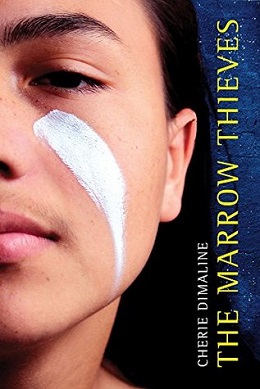
The Marrow Thieves. Cherie Dimaline

The Marrow Thieves © Cherie Dimaline

If you prefer to read as PDF, click here

Story: Part One (novel excerpt)

“Anishnaabe people, us, lived on these lands for a thousand years. Some of our brothers decided to walk as far east as they could go, and some walked west, and some crossed great stretches of narrow earth until they reached other parts of the globe. Many of us stayed here. We welcomed visitors, who renamed the land Canada. Sometimes things got real between us and the newcomers. Sometimes we killed each other. We were great fighters —warriors, we called ourselves and each other— and we knew these lands, so we kicked a lot of ass.”

The boys always puffed out their chests when Miig got to this part. The women straightened their spines and elongated their necks, their beautiful faces like flowers opening in the heat of the fire.

“But we lost a lot. Mostly because we got sick with new germs. And then when we were on our knees with fever and pukes, they decided they liked us there, on our knees. And that’s when they opened the first schools. 

“We suffered there. We almost lost our languages. Many lost their innocence, their laughter, their lives. But we got through it, and the schools were shut down. We returned to our home places and rebuilt, relearned, regrouped. We picked up and carried on. There were a lot of years where we were lost, too much pain drowned in forgetting that came in convenient packages: bottles, pills, cubicles where we settled to move around papers. But we sang our songs and brought them to the streets and into the classrooms — classrooms we built on our own lands and filled with our own words and books. And once we remembered that we were warriors, once we honored the pain and left it on the side of the road, we moved ahead. We were back.”

Minerva drew in a big, wet sniff, wiped her nose across her sleeve, and then set about chewing the fabric once more. 

“Then the wars for the water came. America reached up and started sipping on our lakes with a great metal straw. And where were the freshest lakes and the cleanest rivers? On our lands, of course. Anishnaabe were always the canary in the mine for the rest of them. Too bad the country was busy worrying about how we didn’t pay an extra tax on Levi’s jeans and Kit Kat bars to listen to what we were shouting.

“The Great Lakes were polluted to muck. It took some doing, but right around the time California was swallowed back by the ocean, they were fenced off, too poisonous for use.”

I’d seen the Great Lakes: Ontario when we were in the city and Huron when we lived on the New Road Allowance. The waters were grey and thick like porridge. In the distance, anchored ships swung, silent and shuttered, back and forth on the roll of methodical waves.

“The Water Wars raged on, moving north seeping our rivers and bays, and eventually, once our homelands were decimated and the water leeched and the people scattered, they moved on to the towns. Only then were armies formed, soldiers drafted, and bullets fired. Ironically, at the same time rivers were being sucked south and then east to the highest bidder, the North was melting. The Melt put most of the northlands under water, and the people moved south or onto some of the thousands of tiny islands that popped up out of the Melt’s wake across the top of our lands. Those northern people, they were tough, though, some of the toughest we’ve ever had, so they were okay, are still okay, the takes tell. Some better than okay. That’s why we move north towards them now.”

Migg stood, pacing his Story pace, waving his arms like a slow-motion conductor to place emphasis and tone over us all. We needed to remember Story. It was his job to set the memory in perpetuity. He spoke to us every week. Sometimes Story was focused on one area, like the first residential schools: where they were, what happened there, when they closed. Other times he told a hundred years in one long narrative, blunt and without detail. Sometimes we gathered for an hour so he could explain treaties, and others it was ten minutes to list the earthquakes in the sequence that they occurred, peeling the edging off the continents back like diseased gums. But every week we spoke, because it was imperative that we know. He said it was the only way to make the kinds of changes that were necessary to really survive. “A general has to see the whole field to make good strategy,” he’d explain. “When you’re down there fighting, you can’t see much past the threat directly in front of you.”

“The Water Wars lasted ten years before a new set of treaties and agreements were shook on between world leaders in echoing assembly halls. The Anishnaabe were scattered, lonely, and scared. On our knees again, only this time there was no home to regroup at. Meanwhile, the rest of the continent sank into a new era. The world’s edges had been clipped by the rising waters, tectonic shifts, and constant rains. Half of the population was lost in the disaster and from the disease that spread from too many corpses and not enough graves. The ones that were left were no better off, really. They worked long hours, they stopped reproducing without the doctors, and worst of all, they stopped dreaming. Families, loved ones, were torn apart in this new world.”

The excerpt from The Marrow Thieves, by Cherie Dimaline, published by Cormorant Books Inc., Toronto, (Copyright 2017 © Cherie Dimaline) is used with the permission of the author and the publisher.

For more about the author

Cherie Dimaline is a member of the historical Métis community of Georgian Bay in the territory now known as Canada. On her website, her biography states: “I come from hunters and women who told stories and made their own remedies when they weren’t purchasing salves from the ‘peddler’ who would come across the Bay once in a while. Some remedies used holy water from the Shrine in town, others used water collected from the Bay on Easter Sunday. Many were based around onions and pine. To this day, my family hunts and harvests.” Dimaline is the author of six books but The Marrow Thieves, published in 2017, was declared by TIME magazine one of the best books for young adults of all times, among other prestigious prizes that the novel received in North America.  This science fiction novel for teenagers presents a future when Indigenous peoples are being hunted for their bone marrow. Dimaline presents an eclectic group of characters that get together and collaborate to hide from the danger; at the same time she presents the social and environmental problems that have led to the dystopian context of the novel’s reality. The second volume of this saga, titled Hunting By Stars, came out in 2021. 

The Marrow Thieves © Cherie Dimaline ~ Siwar Mayu, June 2022


A Selection of Contemporary Gunadule Literature

Photograph of a mola from Sue Patricia Haglund’s mola collection

Introduction, selection and translation from Spanish © Sue Patricia Haglund

Texts by Gunadule authors © Dad Neba Nelson De León Kantule, 

© Taira Edilma Stanley Icaza,

 © Cebaldo Inawinapi De León, 

© Atencio López, 

© Kinyapiler Johnson González, and 

© Maninaindi R. Roldan. G

If you prefer to read the PDF, please CLICK HERE

To be Gunadule is to be Gunayala and to be Abiayala/Abya Yala

Baba and Nana are supreme beings, our creators.
 
Abiayala/Abya Yala, known as saved territory and land of blood, is also as our brother, Dad Neba Nelson de León Kantule says, Abiayala/Abya Yala represents spaces “of fullness."
 
Abia - blood
It comes from the dulegaya language, dule language or also known as guna or Gunadule
Abe/Ablis is blood – and the word, Yala-land, mountain, continent, territory.
 
blood land; spilled blood and life blood.
 
Abiayala/Abya Yala is solidarity and collective, with collective solidarity we are similar to the earth, a land of fullness and life,
 
To understand the depth of Abiayala/Abya Yala, it is more than the four stages of the evolution of our worlds, it is the memories of our stories of Babigala, of Baba and Nana, of Ibeler and his siblings, they are stories of chaos and unification, of Biler and Ibeler, therefore, for us Dules, it is about relational positionalities.
Abiayala/Abya Yala exists.
It is not about ‘the Americas’. It is more.
Abiayala/Abya Yala, has always been alive and present.
Abiayala/Abya Yala is the evolution of development with collective solidarity, not the chaos of destruction, because as in the words of our brother, Marden Paniza, Gunadule musician and composer, it is to remind us that mer burgwega anmar namagge “we sing to not die” and in these we sing.
 
Anmar di, we are water
Anmar yala, we are land and mountains
Anmar ari, we are iguana
Anmar achu, we are jaguar
Anmar yaug, we are turtle
Anmar bansus, we are hummingbird
Anmar Abiayala
We are land of blood
Land of spilled blood, blood of life
We are a land of fullness
And we don't lack anything
Itogua.

~~~

Dad Neba Nelson De León Kantule*

Napguana Asociation

Indigenous peoples, development and Environment

After the United Nations Conference on Environment and Development, held in Rio de Janeiro, Brazil, in June 1992, it was a historic event for indigenous peoples and their rights in relation to the environment, where it recognized the indigenous peoples and their communities to the care of mother earth that they have been doing and the use of the environment. The importance of traditional knowledge and practices of indigenous peoples was recognized and the international community (states) committed to promote, strengthen and protect the rights, knowledge and practices of indigenous peoples and their communities.

Indigenous peoples continue to be targeted by those who promote alleged developments with globalizing plans, which in the long run further harm our precarious living conditions. All this happens in a convulsed world, where internal wars or wars between states are becoming a habit. In the same way, wars between the powerful (transnational companies) are reasons for the displacement of indigenous peoples in subhuman conditions, when they discover minerals, when they want to build hydroelectric plants and others, in our territories. (There are plenty of examples in Abya Yala (Abiyala), (America), the case of the Kuna of Mudungandi, in Panama, the Bayano hydroelectric plant, and the construction of the Barro Blanco hydroelectric plant.
Talking about development for the Indigenous Peoples does not only mean talking about investments and cooperation brought from abroad, it means, first of all, the recognition of their culture and traditions, which also involves respect for the ancestral technology with which our Peoples have survived.

Faced with this reality of the great changes mentioned, we indigenous peoples face these challenges and we have to prepare for those to come, without renouncing our roots or the principles that our ancestors bequeathed to us. Taking up the teachings of the great sages of our history, our identity, adapting them to the reality of the present, to project into the future.

It is time for the indigenous peoples to plant their own model, based on our organizational dynamics, with political, socioeconomic, cultural, religious, territorial and autonomy approaches, in short, the claim of our specific and collective rights, based on solidarity, equity, historically underestimated by the Uagas (non-indigenous).

We are not against development, we want development and remain indigenous. What we do not share and we do not agree with are the impositions of the Western development model, which have proven to be inoperative, outdated, which have caused ruptures and considerable damage to our political and social structures of our peoples. These models imposed on our peoples, migrations, changes weaken our cultural identity. The Uagas (non-indigenous) will always see the indigenous peoples as an obstacle, a barrier to development.

The indigenous peoples, in general, have a long experience in the management of natural resources, since we have lived since time immemorial in direct contact with nature, obtaining from it the necessary benefactors to satisfy our needs. Even though they have not defined the concept of sustainable development, they have been putting it into practice for many years.

Indigenous peoples have lost much of their territories in the name of development, and are at risk of further losing ancestral lands and sacred places, many of which contain the richest biodiversity in the world. Governments that have joined the Convention on Biological Diversity have an obligation to enact domestic laws or amend their constitutions to ensure the participation of indigenous peoples in the conservation and sustainable use of their environment.

I wonder what forests, what biodiversity do our countries sell or negotiate to redeem their foreign debt? We have rich forests, minerals, fresh water, seas, if we sell everything today, tomorrow we will also be poor and we will not have them to bequeath to our future generations, therefore we cannot say whether to make any investment thinking about today's hunger.

We indigenous people are going to accept investments in our region without any problem, as long as the investors are honest people and want to share the profits with us, those who do not make our brothers work so as not to pay them later... those who do not hide behind the politicians in power to insult an indigenous culture, those who have the patience of the indigenous authorities in the negotiations. We are aware of the wealth we possess, but the world does not end tomorrow and there will come other relatives of ours who will thank us for not having exhausted everything at once of what our Napguana (Mother Earth) bequeathed to us, mother of all development if we love and preserve it, or simply from human misfortunes, if as their children we do not know how to respect them.

All the demands of our peoples are fair and legal in light of international and national laws, agreements, treaties and other instruments that speak about the rights of indigenous peoples. We can mention a concrete example with the adoption of the United Nations Declaration on the Rights of Indigenous Peoples, art. 32. Paragraph 2. The States shall consult and cooperate in good faith with the indigenous peoples concerned through their own representative institutions in order to obtain their free and informed consent before approving any project that affects their lands or territories and other resources, particularly in connection with the development, use or exploitation of mineral, water or other resources.

But the full recognition of the rights of indigenous peoples is not given clearly in all countries. For this reason, true recognition and not only on paper or laws, is the essential starting point to change along the path towards full development. Which means that we indigenous peoples have the full capacity to carry out our own development and that we are given this opportunity.

We only ask for the opportunity to at least be given to chart and choose our own destiny, based on our principles and cultural values, which have so far proven to be valid in our communities.

The main characteristic of indigenous peoples, unlike Western society, is that social systems are based on help, mutual protection, brotherhood and solidarity. That they do not need to be written in voluminous codes that in the end are not fulfilled, it is in daily practice that our people make it a reality, it is our way of life. Both the social, political, economic and spiritual aspects of life are vitally linked forming a unity.

For all that has been said above, I continue to maintain the principle of my Kuna teachers, for our parents, naskued (development) means producing the land and learning traditional knowledge for the benefit of all and not of a few, not to be rich individually, but to share it with everyone.

This value has kept us going despite the many changes that are happening in indigenous society. The Kuna cultural identity is still alive, will continue to be alive, as long as our peoples live together. The strength of our culture has persisted throughout history; the entry of some imposed models in the region has changed some things in our communities, and even so, it has not been able to change our being, we will continue to be Kuna.

This path is essential, considering the active participation of indigenous peoples, such as the Ngäbe, Kunas, Emberás, Nasos, Wounaan, Buglé, Bri-bris people.

Thus the participation of women, youth, the elderly and others. Whose contribution will allow the construction of a more solid, harmonious, and representative legal basis, the result of which will be a fairer and more balanced society, in the same way, the political will and tolerance of all the actors, to understand and accept the existence of this diversity of peoples. indigenous in Panama.

For peaceful coexistence and the construction of a true democratic society, it is essential to recognize and give value to the existence of indigenous peoples with their different values and interests, as well as to respect and tolerate those historical values and interests that distinguish us from others. Logically, a mere moral recognition is not enough; in a country like Panama, where different cultures coexist, it must be reflected in its legislation, in the constitution. There should not be a group that imposes its own norms and values of conduct and behavior on others.
* Dad Neba: In the Kuna indigenous language, it means, "Grandfather of the Plain", with that name identifies Nelson De León Kantule, Kuna indigenous communicator / Director of the Napguana Association. E-mail: duleigar@gmail.com and  napguanakuna@gmail.com

~~~

Photograph of a mola from Sue Patricia Haglund’s mola collection

Taira Edilma Stanley Icaza

KIPARA

I want to talk about the strokes
of my body
From the traces where I come from
From the source that drives
my starting point

Of my first spiral line
of my heritage as an indigenous woman
of my rebellion, my nahua and my mola
of the courage that runs in my veins
from Grandma Carmen and Mom

Let the strokes penetrate
my body
talk about heritage and our
footprints
From sisters Bertha and Marielle
let me scream and love

I want to trace my body again
and again
drink from the inna*
feel the holy river
get tangled up again in my strokes
plot and plot
until starting with the end point,
like spiral

*inna: corn juice, drink

El Luna 1925 and Wewe

Another night, one of those nights
Of love
where cries are whispered
sadness, tears and more tears
They shake and shake the sweat

Wewe*, try to flap the humidity
And with basil in their mouth
gives peace of mind
stop so cruel
action, outrage
and rape.

Their wings flap
And they calm the pulse
ears try to hear
forget, that one
Crescent moon

Their eyes when sinking give the message
the voice that comes from their wings
soothe the soul,
brother moon,
whisper to Wewe
Let's sing


*wewe: variety of small cricket that abounds along the coasts; sand flea.

Photograph of a mola from Sue Patricia Haglund’s mola collection

Cebaldo Inawinapi De León

         1

An Di! 
An Di!
Water we are. Water we will be!
In a Kuna village a girl is born, and the midwife sings, the grandmother sings, they sing: We come from the water and with the water. Born from the fertile liquid of the placenta, which will later be fertilizer and will be sown (placenta and umbilical cord) in generous land, blessed by rain.
 
The girl grows up. One day, her body tells her that life is fruitful and for several days, the women of the village will bathe her daily in a surba –a sacred house made of leaves, words and a lot of love-, water and her and the words of the accomplices. and her desires and her dreams traveling through this sacred territory: her body!
 
Water and Word, tattooing puberty!
 
The woman goes to the final journey, the poet sings to her of her days and nights, and she receives the perfumed bath of flowers and plants and the last journey will be in the river of her youthful loves and planted in the generous forest... and she begins to navigate the sacred river that will guide her to the final Matria.
 
Water we are! The Greater Poet sings
Water we will be! The village sings.
 
A fruitful liquid brings us - in loving waters we love and create - and in a generous liquid we travel to the Final House!
	2

Our Great Poets sing that a fine and magical thread unites, sews the waters of the rivers, the seas, the trees, the forest, the earth and its inhabitants, building a great network, balancing and harmonizing the sounds, colors and the fruits of the earth.

We are all One!

Song and art that our greatest creators, the Kuna women, have understood in a wonderful way, when they sew their dresses, their molas with colored fabrics where they tattoo their dreams, their desires, their stories and charms that come out of the left side of their chest and glide to the tips of the fingers.

And they continue it today, in these urgent times, their children, their grandchildren…harmonizing sounds, colors and dissonant things.

It is part of the larger network, of the universal fabric, balancing sounds, colors and flavors, and if one day part of the network breaks, we must quickly fix it, sew it, so that we can continue walking and rocking in this Universal Hammock, our Great House, Earth.
          3

who orders the time? It is not the clock, it is the Word, it is the Language (I know I read it in some enchanted page of a beautiful book or in a song in some marine village) and it takes me on this urgent flight, to my days in the Big House, in the marine village, when the Great Poet, the Sagla sings and counts the days of the village, of the tribe, of the Earth,

because what inhabits and tattoos us is the time of speech, of words, of enjoyment, of the verb...reinventing worlds, word by word, creating magic...!

Degiii!

~~~

Photograph of a mola from Sue Patricia Haglund’s mola collection


Atencio López

NOSTALGIA

I try to look
clouds and birds
at sunset,
but I couldn't.

my eyes blinded
delve further into
childhood memories
they won't come back

happy existence
in their laps
my future was formed
my hope.

Today,
of my life defoliate
flowers, dreams,
petting
to accompany me
forever.

From the beach, sea,
I feel that something
turns off
I go around the world
carrying love,
hearts
and about them
I have to sleep
cry.

I feel love
but it overwhelms me
deep sadness
I hope the tears
wash away that bitterness
and may dawn
by your side
making love…

GENOCIDE IN ABYA YALA

Nothing to celebrate
October 12th
start date
to genocide ever
written
in the history of mankind.

One hundred million human beings
led to the stakes
slaughtered and killed
in the name of god and the bible.

Kings of Spain
believing saviors of the world
inundated with human scum
our continent
human garbage
that wanted to delete
indigenous history.

From graves, forests,
rivers, seas and lakes
the slaughtered face
of grandmothers and grandfathers
they emerged to sully
Western pride, European pride
Abya Yala writes her own
history with an indigenous face
to the sound of the cry of
Liberty…

WOMAN

With music from ancient times
to the sound of flutes and maracas
I come drunk among fish
ocean smell
I bring before your altar
algae and flowers
that I pulled out
from the bottom of the sea,
 
I want to cry in your arms
And take your aromas and tenderness
to other worlds where I can
tell love stories
born on islands and beaches
under the raging sea
and a harsh sun.
 
Love of tanned faces
by saltpeter and starry nights,
loves,
memories and legacies
of our warrior ancestors.

~~~

From Sue Patricia Haglund’s mola collection, this mola is made by Rosa Lidia Gallardo, Sue Patricia Haglund’s cousin. The crab and fish mola is made by Gunadule mola-maker, Rosa Lidia Gallardo (granddaughter to Juan Gallardo, who is the brother of Sue Patricia Haglund’s grandfather, Ricardo Walker.)

Kinyapiler Johnson González

IT WAS IN ARINII (*)

Suddenly the rhythms of troupes are heard,
the tunas**,  going up the street and down the street;
slippery ones come out on any street,
signal that the carnivals have arrived in Bannaba (1).
While, in the spirited and seductive Caribbean,
on the islands of the Tule Republic,
with pride the flags of the revolution are hoisted;
is the month of Morginnid e iba (2) is arinii. 
I have my red cotton shirt,
the urigan (3) are painted “enraged achiote”;
the fangs and hearts of jaguars, 
the claws and beaks of eagles came together.
The uprooted molas were stained with blood that day,
rings and winis (4) prohibited 
and scattered throughout the archipelago.
Forbidden to forget that date, tattooed on our hearts.
The jars of gabir (5) kicked and broken,
the braziers extinguished by boots,
the forbidden rituals,
split hammocks…
Never forget us companions,
that this country cost us blood
and it was not a gift from any government.
Alert, alert brothers,
Gabidamalargeee... (6)
Today the jars of the revolution
are fermented on each island,
to toast peace
to the heat of the totumas de gabir.
Today like yesterday we share that joy
together with our people,
because our eternal young warriors of 1925
planted their old hunting shotguns with a single shot,
but accurate as Igwaoginyabbiler's arrows,
the archer of the best marksmanship, brother Venus;
so that today his children and grandchildren can enjoy
and enjoy what we have...
¡Noggasdde, iddomalando, sioggooooo…nagase! (7)
Let's shout and toast with our grandmothers and mothers.
* arinii = iguana moon (month of February)
** the tunas = groups of people with song and music who dance in the streets with a drum ; dance and other instruments during the Panamanian carnival.
1. Morginnid e iba = Red Shirt Month
2. kuna warriors
3. beads
4. strong fermented drink
5. do not sleep
6. Kuna Toast: We have the gourd, let’s try, cheers…bottom’s up!

DIIANAI  (dulegaya)


“Iawala ganaggwa agdededi yalabali, 

Dada Nagibelele bega ulusumba sie nasaye, 

nue daggedi yalabali yee…” 

(Inicio del verso de Aggwanusa adaptado por mí, en el original dice “Pato Diolele”, donde digo: “Dada Nagibelele”

y en parte me inspiro en ese tratado de Aggwanusa, 

está dedicada a alguien muy especial).

Iawala gwenaddiye, bedi an idusad
nega sagla unni; andi bese gormaggenai,
be gammu ganse be ulusumba billinganba.

Inaulu dagge yobi bedi maigudeye,
gwena benunis nalleguemaisuli;
nii ulu obaggemaid ilaba nega duubali.

Nana Olonubdiigili, be ordiidina 
aryomegisa, ber gungidagge yobi; 
agddarmaggemai be ana gandi.

Nana Maninubdiigili, be maninisdii
suurmaggemai, ber maniale 
ber manidaggeyobi.

Nana Inanubdiigili, be inadii
wawadiggi ber inabisebdili yobi;
goggedili, nunabdili bunnogemainie. 

Nana Igwanubdiigili; be ganngued,
be sabed anga ugge;
bargaegala be nunis maniga sademalad.

Be inaulu wawanmaggemai nie;
suemola bedi yoemai,
be burba, Nan burba mogir inbaba.

Oloeaidiili be suggedi dinnaguemai,
anmar nuggi, gwenad an be daggsuli;
anai dii emi be ibagi, an bega soge Anna Diianai.

DIIANAI 

Big brother river, you who are before me
since the beginning of time; I invoke you,
to your tributaries to your subterranean origins.

You who cross like a great medicinal canoe,
giving away your milk to everyone
in each trip of the moon in its canoe through the sky.

Mother Olonubdiigili, your golden liquids
they travel, and fall radiant as gold on their way;
in your shining tributaries.

Mother Maninubdiigili, your silver liquids
They run and shine like silver
like argentas on the road.

Mother Inanubdiigili, your fragrant
medicinal waters such as essences of basil;
breaths of goggedili, nunabdili.

Mother Igwanubdiigili; give me your strength
and your love; to stop the merchants
who profit from your milk.

Your trembling medicinal canoe is;
with a rainbow mola outfit,
your strength, spirit of the Mother among the clouds.

Oloeaidiili your stream is drying up,
because of us, I no longer see you as a sister;
My friend water today, I tell you Anna Diianai (hello friend water).

Poetry 01

Poetry

is the full moon

on your moon,

it’s your smile 

in my sadness,

it’s dawn

in my sunset,

poetry is the blossoming

of the dilla at dawnby dillanii… *

* dilla [dil´la] in Kuna (language) is palo santo plant, and dillani [dil´lanii] is the palo santo moon or the month of March.


Poetry 02

Poetry is the delicate

Kuna woman’s hands

that transform the threads and fabrics

in multicolored verses in their molas

at sunset in Kuna Yala.

And in her early mornings

her calloused hands lift the hot pans

to prepare breakfast

to the future slingshot rebels,

heirs of February 25.


~~~

Maninaindi R. Roldan. G

Kipara

The universe and
their hugs manifest
in designs
in black symbols
in alchemical forms.

There are hidden truths
in its geometry / lines that join us


The recipient skin of legacies
serves as a fragile canvas
where they rest from their long journeys.

It is in it that they live/migrate/mutate
               	they return to being simple cosmic lines.


Next to my memory you are

You are the force that sustains my struggles
The hug that protects me from strangers

Your old war is today my shield
/ My award
Your flag ⎯symbol of rebellion and courage⎯ is my spear
That's why I thank you dear grandfather who inhabits my memory
That's why I thank you dear grandmother for your sacrifice

Today as children of February we fight to deserve your name
To rock the Matria that so many of us love

I wave the flag of rebellion
                              of the sacrifice
                                                  and life

Ephemeral

We have the season of the hummingbird.

A season of sighs.

A season of echoes and nostalgia.
Of jar and song.

And in that space where time sings
you are the point of this hour

the minute in the cloud.

About the Gunadule Authors

Dad Neba Nelson De León Kantule is a Gunadule essayist, scholar,  and activist. His name, Dad Neba, in the Kuna indigenous language, means, “Grandfather of the Plain”, with that name identifies Nelson De León Kantule, great grandson of Nele Kantule, Kuna indigenous communicator / Director of the Napguana Association. E-mail: duleigar@gmail.com and napguanakuna@gmail.com

Taira Edilma Stanley Icaza is a Gunadule activist, poet and scholar. Taira graduated from the Bachelor of Science in Education with a Post-graduate degree in Higher Teaching. She is a member and activist of the Kuna Youth Movement (MJK) and other international indigenous organizations. She went to Bolivia to study for her master’s degree at the Universidad Mayor de San Andrés and works at the Office of Indigenous Peoples at the University of Panama.

Cebaldo Inawinapi De León is an author, artist, poet, and Gunadule anthropologist born on the Island of Usdub, Autonomous Region of Gunayala, Panama. Inawinapi lives between Portugal and Panama and is the author of the book My First Tree: An Sabbi Iduged (2019). He is also the protagonist in the film, Panquiaco, and is part of the documentary, LucíaMor: La Mola de Lucía. Learn more about Inawinapi here.

Atencio López is Gunadule from the Autonomous Region of Gunayala, Panama. He is an author, poet, and attorney for Indigenous, Commercial, Criminal, and Civil Law. He studied at the Faculty of Law and Politics at the University of Panama and obtained his Master’s Degree in Commercial Law at the Universidad Interamericana de Panamá. For several years, Atencio has held various positions in Panamanian and international indigenous organizations. Learn more about Atencio here. 

Kinyapiler Johnson González is a Gunadule poet, artist, and cultural activist. He was born on the island of Usdub, Autonomous Region of  Gunayala, Panama. He studied at the Faculty of Economics at the University of Panama. In addition, Kinyapiler served as administrator of the Guna General Congress on a few occasions, is a member and activist of the Kuna Youth Movement (MJK), and a founding member of the Ibeler Wagan Theater Collective.
Maninaindi R. Roldan. G. is a Gunadule poet, artist, and psychologist born on the island of Usdub, Gunayala, Panama. He studied at the University of Panama and has a degree in psychology. As an artist, he participated together with the Igar Yala Collective in the making of the film Burwa Dii Ebo (The wind and the water), an official selection of the Sundance Film Festival 2008. He is the author of the book, Demonios en mi desierto (2019).

For more about Gunadule art and literature

More about Sue Patricia Haglund


She is a Gunadule poet and scholar from Panama and the U.S., and holds a PhD in Indigenous Politics from the University of Hawai‘i at Mānoa. She researches the works of contemporary Gunadule poets whose poetry reflect the cultural metamorphosis of the actualized transformation of Gunadule oral tradition and poetry that speak against colonialism and empire. Her poem, “Conversaciones con mi abuelo,” was published in the first anthology of Gunadule poetry, Antología de Poetas Kunas (Panama City, 2015), and she has published several book chapters in edited volumes, including Indigenous Interfaces: Spaces, Technology, and Social Networks in Mexico and Central America (2019).

A selection of contemporary Gunadule literature © Sue Patricia Haglund ~ Siwar Mayu, May 2022

Shunku-yay / Looking at Each Other Through the Infinite of the Heart. Samay Cañamar M. 


Shunku-yay / Mirarse en la eternidad del corazón
© Samay Cañamar M.

Translation from Kichwa © Fredy A. Roncalla

Ilustrations © Manai Kowii

If you prefer to read the PDF, click HERE

Shunku-yay

Shunku-yay arawi kamuni, runa shimipi, mishu shimipi killkashka kan. Ñukanchik allpa mamata kuyashpa charinamanta rimapan, shinallata runa warmikunapa kawsaymantapash riman.

Shunku-yay / Looking at Each Other Through the Infinite of the Heart is a collection of poems in Kichwa and Spanish that was born as a cry for empathizing with sacred Mother Earth as well as with the body of Indigenous women and their reality.


Minkachiway 

Kallari willkay

Minkachiway,
kikin achiklla muskuywan,
kay munayta, kay shimita, kay rurayta watachinayan.
Allilla, kikin sumaklla ukuman yaykunkapak.

Kikinpa samaywan kay ñankunapi kumpatukunayan,
kucha manyakuman yaykunayan,
urku chakikumanta puri kallarinayan,
chakra manyakumanta tarpunayan,
kikin wasi ñawpakuman kimirinayan.

Minkachiway apukulla.
Minkachiway allpa mamakulla.
Kikin chaskikkunaman willapaylla. Mayllak shunkumari shamukuni,
upalla supaykunawanmari minkarimukuni.

Minkachiway, sumak kawsak samaylla, willka kuskalla.
Kikin wasiman, mayuman chayamunimi,
kuri allpakuta kay shunkuwan takarinkapak shamupanimi.

Minkachiway kikin ukshakupi, kikin apu pintukupi,
paktalla muskuykuta karawankilla,
usharinalla ushaykuta mikllachiwaylla,
tukuy llaki kawsayta kaypi uriyakuchichun sakiwaylla,
kikinpa rimaypi rikcharinkapak,
shinashpa samashkatapash tullpushpa sakinkapak.

Minkachiwaylla,
puyu killpamukpi,
inti llukshimukpi, 
tamya urmamukpi,
kikin rimamukuwankimi yasha.


Minkachiway
(Kallari willkay)

Initiation

I ask for your permission

to enter into your realm

while I gently gather my desires

acts and words

with clear dreams.

I wish to talk about your time

in these paths,

arrive to your lake’s edge

get closer to your house’s entrance

and start my path 

at the foot of  the mountains.

I ask for your permission, dear Apu.

Give me permission, dear Mother Earth.

My body has been getting ready

and my soul wants some rest.

Welcome me,

sacred place that gives breath

to good ways of living.

I am arriving to your house and your river

to touch you, blessed land, with this heart.

Let the deepest dreams come

blessing me with your powers.

Let me go beyond all my tears

and wake up in this conversation

full of colorful and breathing words.

With the rain coming down

I will hear your words

talking to me.


© Manai Kowii

Ñukanchik allpa mamaka tawka kawsak apukunata, samaykunatapashmi charin, paykunapi tukuy pachapi kawsamushka kan. Kay wakakunaka, hatun ushaykunatami charin, hatun samaykunatapash, chaymi paykunapa wasikunaman yaykunkapakka, minkachiway nishpa yaykuna kashkanchik. Shinami paykunata rezashpantin, takishpantin, rimachishpantin yaykuna kanchik. Urkuman rikushpaka, minkachiway ninami nishpa hatun taytakunaka yachachishka kan. Ima chakrata tarpunkapak kallarikushpapash, minkachiway nishpa yaykuna kashka ninmi hatun mamakunapash. 

Chashnami shuk wakakuta minkachiway nishpa kallarikrinchik. Wakakunaka mana warmillaka kanchu, mana karillaka kanchu, shuk shuk ushaykunami watarishka paykunapika, wakinpika warmi, wakinpika kari, shina rikurin punta rimaykunapi, shutikunapi, ima ruraykunapipash. 

Mother nature/allpa mama is constituted by several bodies and time-spaces or pachas. Sacred territories or wakas with their own powers, where we cannot enter without first asking permission, through prayers, greetings, chants, whistles.

Minkachiway is the beginning of an entering ritual to a space. The grandfathers say minkachiway when they start walking at the foot of a mountain. The grandmothers ask permission for announcing the arrival at a chakra/crop. The nights before a purification bath ritual, one reaches the water spring by saying minkachiway, just as one announces her own arrival to someone else’s house.

This is how we now enter a waka or a sacred place such as our apus, spirits of the mountain with diverse powers beyond the feminine and masculine, personified in names, actions, and stories.


Warmi Imbabura 

Urku apu

Uksha pampawan killparishka warmimi
kuyaylla yana ñawiku, kalluyashka makiku,
tukuy wiwakunapa, yakukunapa, apu warmi.
Kikin umapika, Illull kuchata,
Chakishka kuchata,
Hatun kuchatapash chashkikunki,
paykunaka tamyapa ñañakunami
pakcha tukushpa, urku umakuta Wayku Chupakaman shamunakun.

Urkumanta hatun apu, hatun warmi kanki.
Uchilla michik wawakunata pampapi pukllachinki,
yana pumawan rimarishpa kawsashkanki,
atukkunaman alli rikuna ushayta karashkanki,
kikin wakakunapi sumaklla ushaykuta allichinki.

Intika paypa chawpi ñanpi kakpimi,
allpa samay pachata wayrawan kushilla takinki.
Kikintikukunaka kikin willayta aparimunmi,
waykukunaka chashkinkapak ashtawan paskarinmi.
Tukuykunami kikin apu punchapi kushiyanakun.
Kikinka kutin, pakta pakta kawsayta 
ashankakunapi churashka shuyanki.

Imbabura woman

Mountain deity

Covered by grasslands

—deep eyes and working hands—

you are the great mother of children

animals and rivers.

Your summit is Lake Illull,

Lake Chakishka,

Lake Hatun.

Their waterfalls and the rain

come down 

valleys and crevices.

Great woman, 

you come from inside the sacred spaces

play with the shepherd girls,

live talking with a black puma,

teach the foxes certain powers,

and keep the magic in your wakas.*

The sun is at the middle of his path

and you sing with august winds.

The hummingbirds bring us your message

and the valleys open up to receive us.

This day all the apus* celebrate.

You hold a well balanced basket

and wait for us.

* wakas and apus are sacred spaces, especially mountains

© Manai Kowii

Ñukanchikka, sinchi ushaykunami kanchik, wayrakuna, ninakuna, yakukuna, allpakunapashmi kanchik. Chay ushaykunataka wakinpika mana riksishpallatami chinkaririnalla kanchik.

We are also spirit that mutates within air, fire, wind, water, mother earth. An infinite force that very few of us manage to experience fully.

Samaymi kani

Samaymi kani.
Kuyurishpa, mirarishpa ashtawan kuyurik.
Sinchilla, tinkushna tantarik, tukyarik.
Paypantin mirarishka tullpushka puchkashna kawsakuk.
Paypura chimpapurarishka,
tukyarishka, mushukyarishka samay.

Ñawpamanta churu laya muyurishka kawsay
shamuk pachamantapash
kuntur yuyaywan sinchi watarishka.

Wayrapa shunku kani
kikinman samayta karakuk;
tukuy manchanayaylla uyariktapash mishkilla uyayta karak:
shuk taki sami shina
asha asha kay pachapa yuyayta takarishpa purik.

Pukyu ñawikushna kuyaylla kani,
urku apukunapa kasiyashka kawsay,
akapanashna kuyurikuk allpa
maytapash pawakuk ushay,
upalla kawsaypipash ima ninata allichishka.

Hatun sumak ushay kani
pachawan awarishka muyuni, 
muyumuni. 

I am vital energy

I am vital energy.

One that grows moving.

I am strength and confluence.

A renewed energy

standing up

and exploding.

My life is the spiral of the past

and what comes ahead

tied up by the wisdom of a Condor.

I am the heart of the wind

that nurtures your vital energy

and makes the tremors of fear

sound gently.

I  am like a spiritual song

touching all the memories of the universe.

I have the beauty of a fresh water spring

of quiet mountains

vast and exalted lands

and silence.

I am young and beautiful.

I go on clothed by the land.

Moving on and on.


Killkana

Imatak kan killkanaka niwarkami
Chayka imashachari nanay shunkuta tuksimurka, yuyaytapash, makitapash nanachirka.
Chay yashka kipaka nirkani;
Killkashpaka ankashnami kay kawsaypi muyurini…

Shina nishka kipapash, uchilla kaspishnallami ukuta upalla tuksimukurka.
Punta kawsayta yarishpa llakiyarkani,
Imatapash chushayachishka shina karkani.

Yachanimi. 
Punta watakunapika, tullukaman chayaktami waktashpa llikata killkanata yachachishka.
Shuklla apunchikmanta nishpa sarumushka,
Shuk shimillami tiyana nishpa. Shuklla runakunallami allikuna yashpa.
Ñukanchik yachaykunataka kuchushpa, ñuka wasi allpata nallikachishpa.
Tawkalla sami kawsaykunata wañuchishpa.

Imasha chay llika kanchikman chayamushkata yarishpa, imashalla ñukanchik pampakunata, awashkakunata, makikunata chushayachishkata rikuni,
tukuy puchkakunapa, kururukunapa samaykunata llakini.
Chay kawsaykunataka ñuka ñawika mana rikurkachu, shinapash ñukapakunami kawsarka.

Kunanka tapurinimi, maypitak ñukanchik killkayka.
Chayta yuyakpika, chumpikunami wasi ukuta warkuriyanakun,
chaykunapi puchkawan shuyurishkakunami rimawan,
ñuka hatun mamapa akchata watakuk cintami rikurimun,
ñuka hatun taytapa awashka katanami ukllamuwan,
ñuka anakupa kinkukunami kumpanakuwan.

Kutin imashpata killkanki nishpa tapukpika.
Ñuka yuyaykunata hampinkapak nimanmi.
Punta punchapika tullutapash nanachishka llikami
kunanpika ñuka shimiwan awarishka, samayachishpa kayman chayman llukshikun. 

To write

They have asked me: what is writing?

A heartfelt confusion spread across time,

memory and my hands.

After a few seconds I answered: 

Writing liberates me.

But there was a splinter silently bothering me.

I was swamped by nostalgia

and emptiness. 

Growing in the mist of memories

an ambiguous voice screamed inside

Bringing rain drops to my face.

I know that at one point in time 

the alphabet was forced upon us punch by punch.

With a God, lord,

King, and language, 

that would mutilate knowledge and sweep my gardens

killing diversity.

Thinking about the origins of this alphabet 

I can feel how they emptied my fields, weavings and hands. 

I feel the threads and their designs are no longer there. 

It’s a loss that my eyes did not see but was felt by my people.

I ask myself: where is our writing?

And hanging from the roof

there are weavings appearing in front of me:

figures drawn with wool thread,

the band that holds grandmothers hair,

the manta that my grandfather did with his life,

the zigzag I carry in my skirt.

If they were to ask me again why I write

I would repeat: to heal memory and remembrance.

Now I am healed with what at one point tied our bones.

I now write with their letters. 


Killkakmanta

Samay Cañamar M., warmi kichwa Otavalomanta, yachachik, feminista, shinallatak psicoterapeutami kan. Arawikunatapash, ima killkanatapash ashtakata killkanata allikachinmi. Shinallatak runa warmikuna imashalla kawsaymantapash ashtakatami rikuchinkapak munan; feminismoskunamantapash.

About the poet

Samay Cañamar M. is kichwa from Otavalo, Ecuador. She is a university professor, a feminist, and a psychotherapist. She writes in Kichwa and Spanish, and  is interested in Indigenous feminisms, and contemporary struggles of women and feminized bodies. @tsay.samay

More about Samay Cañamar M.


About the translator

Fredy A. Roncalla was born in Chalhuanca, Apurimac, Peru in 1953. He has studied linguistics and literature, in addition to a long journey in Andean Studies, with a special focus on aesthetics. He is also a handcraft artist who works with recycled materials. He has published poetry and essays in diverse online and printed publications. He is the author of Canto de pájaro o invocación a la palabra (Buffon Press, 1984); Escritos Mitimaes: hacia una poética andina postmoderna (Barro Editorial Press, 1998); Hawansuyo Ukun words (Hawansuyo/Pakarina Ediciones, 2015); and Revelación en la senda del manzanar: Homenaje a Juan Ramírez Ruiz (Hawansuyo/ Pakarina, 2016). He is currently working on Llapan llaqtan: narrativa y poesía trilingüe/ Llapan llaqtan: trilingual poetry. His trans-Andean projects can be found in the virtual ayllu: Hawansuyo Peruvian Bookstore, Churoncalla.com, and Hawansuyo.com

Shunku-yay / Mirarse en la eternidad del corazón © Tsaywa Samay Cañamar M.Translation from Kichwa © Fredy A. Roncalla 
Siwar Mayu, May 2022

Around the House. Maya Cú


Original poetry in Spanish from Alrededor de la casa © Maya Cú

Introduction, selection and translation by Gloria E. Chacón and Juan G. Sánchez Martínez

If you prefer to read the PDF, click HERE

Kaqchikel researcher Aura Estela Cumes explains that paternalistic culturalism in Guatemala represents the Mayan woman as a tourist object, a museum piece, a weaver and guardian of culture, but at the same time separates her from the possibility of being an “epistemic authority.”  Maya Cú captures this sexist paternalism in the following verses:

(...) to be clear:
I am not
an ancestral clay doll
revived by divine breath
of postmodern intellectuals.

Since 1996, Maya Cú has been reminding Guatemalan—and by extension Latin American— society how scared they are to look in the mirror and discover how brown, how cinnamon, how mixed they are, how  “beautifully brown” [they are] (“Rabia / Rage”.) In her essay “Poetas y escritoras mayas de Guatemala: Del silencio a la palabra” (“Mayan Women Poets and Writers from Guatemala: From Silence to Word”) (2016), Cú questions the censorship of colonial institutions (school, family, church) of Indigenous women voices, but also interrogates the self-censorship of Indigenous women. In some cases, Indigenous women do not recognize themselves as writers (84). In Cú’s words, the expectations of editors and academics about Indigeneity (as a rural and ethnic problem) preclude them from recognizing the diversity of contemporary Mayan expressions. The poems that we publish here are a sample of Maya Cu’s latest book, Alredor de la casa (“Around the house”) (La Chifurnia, 2022). 


It was never
more than a shelter
from the outdoors

it had
fragile walls
humidity

there we cohabited
rats
trash
my sisters
me

it was the house
it is the house

root of
a human
group

and that woman
a column
who refuses
to let it fall

An aseismic house
must have a strong foundation
a deep iron frame

when the earthquake comes,
the house will hardly fall

What if this tenant does not have a good foundation?

Wooden walls
vulnerabile before fire

aluminum walls avert rain
but lock the heat in

cement ceilings and walls
protect from rain, sun, fire

how to avoid loneliness?
how does one defend oneself from sadness?
how to build
kick-proof walls?

who designs houses
that shelter, feed, protect
and provide endless doses
of understanding and tenderness?

For those in the room. Managua, 2002

We live together
we recreate love

we strip
our skins

we listen to each other
we fight
we laugh, we play
we were girls
we cry

we were
the women
from that room
killing borders
creating
a new house
from which we didn't 
want to leave

a refuge
with sisters and mothers
in a constant coven
giving us freedom

There is a lot to do
a lot to do

first
we will rearrange space

the cardinal points
will be oriented in the direction
of heaven

the moon
will be full
for a long time
the rainy cloud will come
at night
to sleep on the terrace

where will we put
the fog?
the balcony that is
on its way
will gladly share
its flower

you will have an infinite 
wall
to set up
your wildest exhibition

for me
I just want the corner
from where I will
see you
my love
assembling
and disarming the world
Where can a young heart go, wounded by distance, melancholy, disdain, if the house is half built? If the walls are fragile and the floor is damp? Seeking refuge without finding it. Leaves running naked, to shelter in other hungry hearts for company.
I aged
inside

left
pieces of me
scattered throughout
walls

I moved
by inertia

I left seeds
in some eyes
hugs
in some bodies

I left
almost empty

now I carry
wrinkles
white hair
nostalgia, pain

I pick up
my pieces
I put them in a bag
and I go out

and I can't find anything
but sadness...
I dreamed
of a house
 
White
surrounded by flowers
and tall trees
 
I only asked for a
deserved 
roof and floor
 
I never had it
 
Yesterday
a provider
of certainty appeared
He daily
builds
next to me
this new house
 
in mutual discovery
we are laying
the foundations
 
we make the walls
 
we share the dream
to put our pieces together
to build a new house
where we will live

Today I undressed
 
I posed for
the camera
 
the room  strewn with
clothes throughout
 
my footprints
scattered
 
when I stopped
I realized
that 
all the mirrors
disappeared
 
I found my body
dancing
smiling
friendly and passionate
 
and it was enough for me

She
knows that upon her return
she will open the door
and feel joy to meet you
for coffee
for dipping  bread
in  coffee
to the listen to the radio
and dance to the beat of your song
 
He
knows that upon his return
he will remove the wire from the gate
cross the patio to reach
your side
 
he will greet you happily
because he managed to finish a day’s work
because the earth responds to his care
 
the sun was benevolent and did not burn his skin
the rain is generous and will fall later
 
he will show you the best seeds
that he found
for the next sowing
 
they will eat next to the stone-bench 
beans and hot coffee
corn tortillas from their harvest
and cheese
 
melted
like them

Elena visits the house

I

Strange communion with Elena

Did you hear my name?
You looked for it and you preferred it, because you know that here, behind this nomenclature, my soul is waiting for a reunion celebration.
But, the only celebration we put up today is one of tears.
Time and time again, the weeping, why unites our hearts like this? Is our sorrow for these beloved cities so great that it is capable of uniting our distant melancholies?

II

girls reunion

Painting that afternoon would be fun if Elena was calm enough to pose.
But Elena is a restless girl who bites her nails and spits the waste on the chair. She wets her feet in the firm sand of a sea that cannot be crossed. A sea that erased the way back to the city of our daydream, our dream, our ephemeral root, our space of communion. I, the little sister, watch her carefully, while I wait for time to stop on this piece of beach, asking Yemayá to take care of us, to be our mother, our goddess, our friend, our compass, to return to that city.

III

The one I’m not

Diva
elegance in the word
voice and erudition
corporeal strength
unattainable height
charismatic presence
 
a story that I would like as my own
feet dancing on the urban cobbled street
sand full of your feet
water full of your fear
lips reciting verses next to Reynaldo

eyes alive of revolution
 
flashing fingers
 
mestizo song 
eternal song 
cheerful song
song with tone
song with you
your song
my song
 
Song  not yet written
half song
song without score
broken song
shared song
song in two rhythms
 
distant song
oppressive
uncertain
 
sad song without reason
sad permanent weep
 
never ending pain
intimate pain
pain countering
parallel pain
 
the one you are not
the one we are


IV

Epilogue

If I ever belonged to someone
it's to you
 
because you chose me
or because my shadowy female ancestor 
chose you

Image

Grandma whisks cocoa
gathers the fire
secures the ocote-sticks
 
the girl braids garlic
draws a circle,  and skeletons 
rise dancing at its center
 
inviting to swing
a song
of few notes
 
I dance
the mist fills with colors
I rise
 
the image
is immortalized
behind the door

More about Maya Cú

The Translators

Gloria E. Chacón is Associate Professor in the Literature Department at UCSD. Both her research and teaching focus on indigenous literatures, autonomy, and philosophy. She is the author of Indigenous Cosmolectics: Kab’awil and the Making of Maya and Zapotec Literatures (2018). She is currently working on her second book tentatively titled Metamestizaje, Indigeneity, and Diasporas: Challenging Cartographies. She is co-editor of Indigenous Interfaces: Spaces, Technology, and Social Networks in Mexico and Central America by Arizona Press(2019). She is also co-editing an anthology Teaching Central American Literature in a Global Context for MLA’s Teaching Options Series. Chacón’s work has appeared in anthologies and journals in Canada, Colombia, Germany, Mexico, and the USA. She has co-edited a special issue on indigenous literature for DePaul University. .\

Juan G. Sánchez Martínez, grew up in Bakatá, Colombian Andes. He dedicates both his creative and scholarly writing to indigenous cultural expressions from Abiayala (the Americas.) His book of poetry, Altamar, was awarded in 2016 with the National Prize Universidad de Antioquia, Colombia. He collaborates and translates for Siwar Mayu, A River of Hummingbirds. Recent works: Muyurina y el presente profundo (Pakarina/Hawansuyo, 2019); and Cinema, Literature and Art Against Extractivism in Latin America. Dialogo 22.1 (DePaul University, 2019.) He is currently an associate professor at the University of North Carolina Asheville, in the Departments of Languages and Literatures, and of American Indian and Indigenous Studies.

Alrededor de la casa © Maya Cú ~ Siwar Mayu, April 2022
Introduction, selection and translation © Gloria E. Chacón and Juan G. Sánchez M. 

Bringing the Cherokee Syllabary to the Spotlight, Jeff Edwards

Sequoyah © Jeff Edwards

By Celestine J. Epps

Published first in the Blue Banner, UNCA

“A Living Language” exhibition celebrated recently the cultural and national identity of artists from the Eastern Band of the Cherokee Indian (EBCI) in downtown Tokiyasdi / Asheville, NC. The curated works on display at the Asheville Art Museum consisted of over 50 multimedia pieces by EBCI artists who direct audiences’ attention to the Cherokee syllabary. 

Their artwork defies the bias that Indigenous languages are dead by uplifting local Indigenous creators who help to restore the language. A variety of compositions such as Rachel Foster’s stone-polished ceramic “Sequoyah,” show traditional representations of Tsalagi, or Cherokee, in cultural artifacts like pottery and basket-weaving. Likewise, the graphic designs of Jeff Edwards puts on a prideful display of the syllabary, and inspires viewers to want to learn how to speak it. His piece “Tsalagiopoly” is delightfully shocking.

The syllabary was invented by a Cherokee man named Sequoyah in the early 19th-century who translated the 4000-year-old language into visual symbols and the written form we know today. 

Tsalagiopoly © Jeff Edwards

Edwards is also a Language Technology Specialist for the Cherokee Nation in Tahlequah, Oklahoma. He contributes to the language education in schools and ensures that students are equipped with the technology needed to be successful. In 2010, the artist worked with fluent speakers to integrate Tsalagi into system keyboards on devices including Apple, Android, Microsoft, and Google

Edwards says: “What started our 10+ years of working with tech companies is we wanted our kids to be able to text in Cherokee. That was it. Nothing more. So, we worked with Apple for about 18 months and once the technology came available we saw something we didn’t expect. Our elders also took advantage of the technology. So not only were our students and elders communicating but they were also communicating with each other.”

Trickster © Jeff Edwards

Upon completion of the keyboard, Edwards explains the labor involved in translating entire operating systems and its impact on Cherokee people throughout the diaspora: 

“So, when we started translating Windows 8 we had 18 months to complete the project. We had the 5 regular employees and some contract translators that were from various communities. We would receive 500-1000 words a day, I would do my thing, split them up evenly amongst the available translators, email the project out and when they finished they would send them back, I would submit and we continued this for 18 months with very little breaks. It is tough to say how many words were translated. It was well over the 300,000 range. But once the project was completed Microsoft in North America recognized two languages, English and Cherokee.”

Despite the nation’s success in making Tsalagi accessible on major platforms, they were forced to stop working with tech companies due to the endangered state of the language. There are only 176 people still living in the Eastern Band who grew up speaking Tsalagi and an estimate of 2,000 speakers left in the United States. Thus, prioritizing second-language speakers in tribal communities.

“A Living Languages” exhibit lived up to its name in its selection of pieces from Cherokee artists across generations. While navigating his busy schedule, Edwards continues to make original graphics. His latest piece, “Relocate, and/or Die” drew inspiration from Benjamin Franklin’s political cartoon intended to unite the colonies during the Revolutionary War.

Relocate and/or die © Jeff Edwards

Edwards explains: “My piece is made on a backdrop of a map of the Trail of Tears and the routes taken in Cherokee. My Uktena is cut into 8 pieces to represent the 8 states the tribes traveled through during removal and the Uktena has 5 buttons on his rattle to represent the 5 tribes that were forcibly removed from their homelands.”

“Anger can be a very good motivator.”

Ultimately, what inspires Jeff Edwards the most is bringing the syllabary to the spotlight.

“I try to showcase something that all Cherokee’s are proud of, our writing system.”

After seeing the exhibition multiple times, I was immediately drawn to Edwards’s work, especially “Tsalagiopoly.” Upon first glance, I recognized the similarity to the game Monopoly, and all that it represents in our western capitalist society. 

Edwards’s intricate designs and sole use of Tsalagi communicate to a specific audience that is uniquely Indigenous. I believe his piece speaks volumes to first and second-language speakers. To participate in the game, you have to be able to understand the rules, but Tsalagiopoly breaks one’s expectations. With the syllabary as the centerpiece of his work, non-Tsalagi speakers like myself are stuck at collecting $200, incapable of moving forward.

The longer I examine the artwork, the more I wish to comprehend the nuggets of history, and cultural references embedded in the cards I imagine in the community chest space. Like anger, ignorance is a great motivator to understanding the language of the land that I stand on.

More About Jeff Edwards

About Celestine J. Epps


Celestine J. Epps was born in Bronx, New York, on April 16, 2000. She is studying Mass Communication at the University of North Carolina at Asheville, and is currently the assistant Arts and Features Editor at the Blue Banner. She enjoys learning about global Indigenous communities, including the Haliwa-Saponi near her grandmother’s hometown. Upon graduation, Celestine would like to write about her conversations with Indigenous storytellers and the impact of their artistry across generations.

Bringing the Cherokee Syllabary to the Spotlight, Jeff Edwards © Celestine J. Epps - Siwar Mayu, April 2022

Putisnan, disenchanting the memory

By Sara Ríos Pérez

Translated by María Grabiela Gelpi

“We did not know that we were Indigenous” is one of the first sentences that is pronounced in the documentary Putisnan, disenchanting the memory (2022), directed by Colombian Oliver Velásquez Dávila—an anthropologist who leads his life between activism and investigating the memory of Indigenous Communities of the Colombian southwest.

At the beginning we see green, green in majestic mountains sheltered by furrows and planted with potatoes, beans or corn. Then a panoramic view of the village of Aldea de María, located in the south of Colombia, in the Nariño Province. This is where the story of the Cabildo Indígena Aldea de María, Putisnan, of the town of Los Pastos is told.

Oliver’s recent documentary is a spiral flight over the territory. First, we look at the landscape, the mountains, the furrows; then we go down and we find the stones, which like great crumbs left by the ancestors, are responsible for taking the inhabitants of the territory to meet the memory of the Pastos. Closer and closer to the earth we see the town, the roofs of the houses, the crops, the roads, to land on the people, in the faces of the inhabitants and enter their house, to their daily lives.

Oliver together with director of photography, Juan Pablo Bonilla, propose a natural handling in the use of shots and follow-up sequences to the characters, with a camera on their shoulder they record the actions of the protagonists as an indiscreet spectator

From the reference of Jean Rouch’s cinema, they propose an image with social commitment and at the service of Indigenous communities. Likewise, there is the influence of the Colombian documentarian Martha Rodríguez, above all in the research methodology, which refers us to participatory narrative constructions, where the audiovisual production instead of made “about” Indigenous people is “precisely from” those involved, in order to support the process of seeking their identity, and the remembrance of their cultural history and resistance.

“We came from a culture of peasants, mestizos, from another way of thinking, not our own way of thinking, after that we came into this process (…) of feeling, thinking and acting like Indigenous people,” says Eloy Gesamá, one of the interviewees.

The documentary shows how the earth is the one who sustains, keeps the practices, the memory whose traces are in the stones. It recounts the process that the Aldea de María community has gone through to rescue their traditions as Indigenous Pastos People, claiming their rights and finding their history, after colonization, modernity, and “development” arrived in their territory.

There are shots of hands brushing the stones, cleaning the earth to remember, to claim the memory, and disenchant it. The stone is called Mama Piedra—she shines to make us see, it is the flame that guides us to rescue ourselves from oblivion.

Putisnan means cosmic library, which is why, in one way or another, the documentary shows how the inhabitants of the resguardo, from their daily lives, are remembering their ancestry as the original Pasto People, searching throughout the traces of that library: “first you have to teach people that there is nothing wrong of being Indigenous,” one of the young women, who is actively participating in this process of awakening, says.

In another scene, Alejandra Güepud adds: “for me, it is to start by putting aside the shame of saying I am indigenous (…) first we have to feel proud of what we are, of who we are, that we do not need to change anything, and begin to feel that we belong to something much bigger, because we descend from someone as important as the Pasto people (…) we have to feel that pride of saying yes I am Indigenous, I know where I come from, and I know where I am going.”

Oliver Velásquez Dávila accompanies this process by documenting with his gaze and showing the viewer a glimpse of the Pasto territory. 

In addition to the present documentary, Oliver, within his searches, has focused on the transmission of shamanic knowledge from the Upper and Lower Putumayo River Basin, among the Kamëntsás, Ingas and Kofan Peoples, which allowed him in 2009 to carry out a documentary titled “Las Rutas del Yagé”, produced by Señal Colombia and DocTv, which deals with the dissemination of these practices in urban contexts. In this journey, he dedicates himself to studying photography and documentary filmmaking as a way of translating ethnographic research into images.

↪ Watch “Las rutas del yagé” here: https://vimeo.com/48574556

More about the Pastos Indigenous Community

More about Sara Rios Perez

She studied literature at the Javeriana University, and currently works as a reading and writing promoter. She is a collaborator for the digital publication Columna Abierta. She accompanies the processes experienced by public and rural libraries in different parts of Colombia. She is the author of De lo Imaginario a lo Real: Cuentos y leyendas de Montes de María (“From the Imaginary to the Real: Tales and legends of Montes de María”), and co-author of  Voces que caminan territorios (“Voices that walk territories”,) an investigation on the right to communication in the Colombian Southwest.

The translator

Maria Gabriela Gelpi Cortes was born in San Juan, Puerto Rico on April 9, 2000. During her upbringing, she studied at the Colegio Marista de Guaynabo where she received a bilingual education. After graduating high school, she moved to the United States to continue her education at the University of North Carolina in Asheville. She completed her bachelor’s degree in International Studies and a minor in Political Science while working at the college’s Health and Counseling Center and interning with a non-profit organization. On the other hand, she worked alongside Dr. Juan Sanchez Martinez creating content and translating texts for the Siwar Mayu project. Maria also took on the task, along with two colleagues from the Latinx community, to create an organization at the university that would support the interests of marginalized communities and give them a space to carry out these types of conversations. In the future, Maria would like to continue her education and obtain a master’s degree in human rights.


css.phpHosted by UNC Asheville and the Diversity Action Council