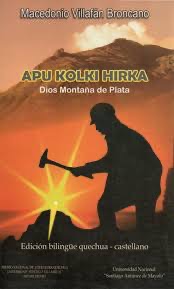
Apu Kolki Hirka / Dios Montaña de Plata © Macedonio Villafán Broncano. 2007.
Selection, introduction, and translation from Spanish © Andrea Echeverría Langsdorf
If you prefer to read this as a PDF, click here
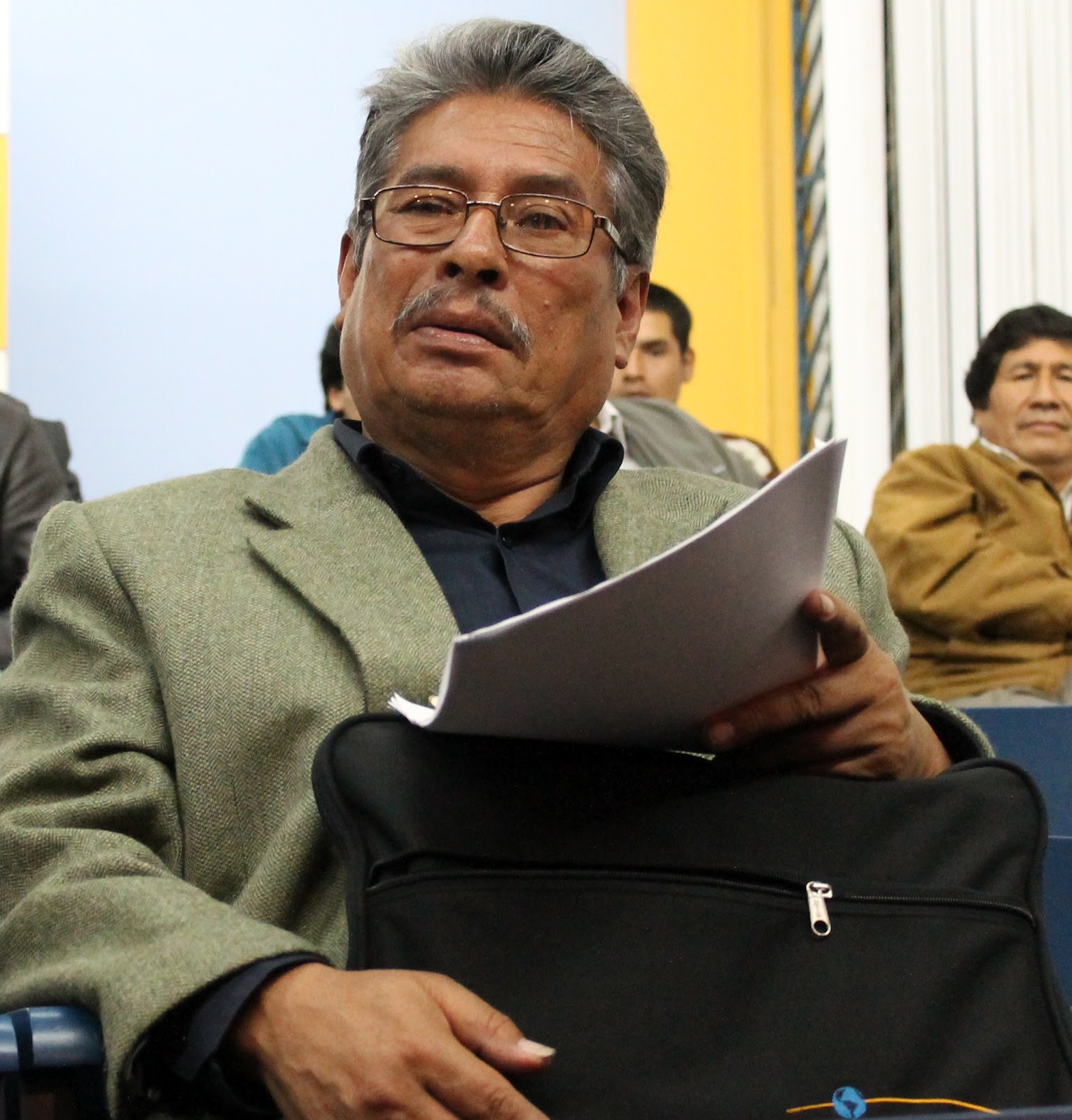
Macedonio Villafán Broncano (Peru, 1949) is a Peruvian writer and educator recognized for his contributions to contemporary Andean literature and for his work in revitalizing the Quechua narrative tradition. Born in the region of Áncash, his writing draws deeply on the Andean cultural world, oral memory, and the historical tensions shaped by colonization and extractivism in the Peruvian highlands.
Villafán’s work is distinguished by its ability to bring Western narrative forms into dialogue with structures rooted in the Andean worldview, particularly the centrality of community, orality, and a living relationship with the land. In his novel Apu Kolki Hirka (1997), he gives voice to a mountain that recounts centuries of mining exploitation, offering an Andean perspective in which nature is understood not as a resource, but as a living subject. His writing thus emerges at the intersection of memory, territory, and historical conflict, constituting a powerful literary intervention that invites us to rethink the relationship between community, spirituality, and modernity in the contemporary Andes.
Below are selected excerpts from Apu Kolki Hirka. In this bilingual narrative in Quechua and Spanish, the apu—a mountain-deity—recounts centuries of history through a non-linear temporality, revealing the sacred bond between Quechua communities and the land, as well as the progressive devastation brought about by colonial invasion and its ongoing expression in contemporary extractive capitalism.
Pasaypa unay patsachooqa Kutakancha runaakunam shayaamurqan; unaypeq kuyamaqnii ayllu runakuna. Kuyaynin Qanchis Qocha kinrayninpam llamankunata, wikuñankunata mitsiyaq paykuna. Tsay mitsiqninkunam tariyarqan qaqakuna raqranpa qellaynii pashtaykaqta; tayta Intiwan chipapaypa chipapaykaqta. Paykunan willakuyarqan yachaq awkinkunaman: “Tayta Kolki Hirkapa pachankunachoomi sellaama shumaq qellay chipapaakuykan”, nishpa. Tsaymi ayllukarkur shayaamorqan. Imatapis manaraq aylluyaptinmi, tayta Amaru, punuyninkunallachoo willapaanaq: “Tsay qellayta munarqa, tayta Kolki Hirkapaqmi qaraynin churayaapunayki”, nishpa. Tsayta wiyaykurmi shayaamurqan qarayninkunawan, takinkunawan, tushoq runankunawan. Allaapa shumaqmi shaqshankuna tushuykayaamurqan, tinyankunawan, pinkullunkunawan, kuyaynin Qanchis Qochapa kuchunkunachoo, yakun chipapaykaptin. Llapaa apu hirkakunapam nawiikunapis, rinriikunapis allaapa kushirirqan. Tsay takikunata wiyar Tayta Amarupis allaapam kushirirqan hina; patsa rurinchoo hatun kuru kayninta kuyuqraaratsirqaran paypis. (p. 5-6)
“I am the old Colquijirka, the mountain or hill of silver, inhabitant of these immense cordilleras of the serpent god Amaru. I am the venerated one of ancient ayllus, their great Apu or Mountain God. For good or ill, for fortune or misfortune, I have offered the mineral of my entrails to all who came to ask for it in good spirit. Since when? Since how many pachacutis or great changes? As if it were only today, I remember it despite the passage of time. And now that they have exhausted the mineral I could offer, seeing how the mining workers leave with their children and their poverty; hearing the voices of the dead in the wind flooding me with their nostalgia, within me I remember… “(p. 5-6)
~~~
Tsaymi noqaqa achka qellayniita pashtaratsipurqaa. Kushikuymi urya kaq tsay patsachaw. Kallpankunawan yanapanakur, kushikuypa uryarmi qellayta raslla aylluriyarqan. Tsaypitanam takiraakun apakuyarqan qellayniita, Qanchis Qochapeq yarqoq Tampu mayu uranpa. Markanman chaarirnam wayra tullpankunachoo ñanpuyaaratsir, ichikllallan qellaypeq shumaq murukunata, waatakunata ruraykur, Mama Pachapaq, noqakuna apukunapaq, Qanchis Qochapaq, churayaamurqan, tamya kananpaq, mikuy achka kananpaq, waatankuna mirananpaq; ari paykunaqa Tampu mayu aywaqchoo quñu patsapita rara punakamam murupakuyaq, waatapakuyaq. Tsaynoo llapanta rurayarmi shumaq kawakuychoo kakuyaq: Mama Pachata kuyashpa, apukunata kuyashpa, Qanchis Qochata kuyashpa; llapan imaykachoopis yanapanakushpa, kushiypa uryashpa… (p.8)
Tsay patsachawpis kushikuymi urya kaq llapanpaq (p.10)
Then I made my silver spring forth abundantly. Work was a joy in those times. Joining their forces and working joyfully, they gathered my silver. Then, dancing, they carried the metal to their ayllu, descending along the banks of the Tampu River that flows from the Qanchis Qocha lagoons. Upon reaching their village, smelting it in their wind furnaces, they made fruits and little animals of silver that they placed as offerings to Mother Earth, to us their gods, to their Qanchis Qocha, so that there would be rains, so that their cultivated fields would bear fruit, so that their animals would multiply. For in that Tampu River basin they cultivated and raised their animals from the warm lowlands to the cold high punas. By doing everything in this way, they had achieved good living; venerating Mother Earth, Qanchis Qocha, the mountain gods, helping one another, working with joy… (p.8)
All the peoples kept my great mandate in mind. They never forgot it. (p.10)
~~~
Tsayraykurmi Manko Inka ninqan, tayta Inti yarqamuq markakunapita, Willkapanpa markachoo runankunawan imanoo tsay shaprakunata hitaytapis musyayanqanyaq, chaskikunata kachamunaq: kutakancha wawqintsikkuna tayta Kolki Hirkachoo uchkukunata alliq tsapaykuyaatsun, nishpa. Tsaymi Tampu mayuman hitarkuyarqan Mama Killapa wayinpaq achka qellay aylluyanqantapis; Atawallpata kachariyaananpaq qellayta qorita Qosqopita achka llamakunawan chaskinkuna apaykaayanqantapis Qanchis Qochamanmi hitarkuyarqan hina, sapa Inkanta wanutsiyanqanta musyaykur. (p. 12)
Everyone was astonished by how the Spaniards coveted gold and silver. The ransom that the Inca Atahualpa gave them in Cajamarca, filling a room so that they would grant him freedom, had meant nothing to them. Because immediately, without showing respect to the gods, they began to take the gold and silver from the temples; they even began to destroy the temple of the ancient Chavín gods; from the great temple of Qoricancha they took all the gold and silver of the gods. They said that the ambition of those bearded wiracochas for gold and silver was so great that they even killed one another. (p.12)
~~~
Chaykaayarqan pasaypa hatun kaq vetaaman. Hina kutipaykuryanmi, Toruupis, Mukiipis, runaakunapis capatazninkunata, willapaq: Achka mineraltam apakuykaayanki; Tayta Kolki Hirkapaq achka qaraynin churayay, nishpa. Tsay shumaq wayinkunachoo, asikuyaqmi mandakuqninkuna, imayka asikuypaqnoo niyanqan kanqantanoopis. Allaapam piñaykurqaa shunquuchoo.
“-Tayta, kaykunata kallpaykita musyaratsishun...” (p. 40)
They were already reaching my greatest veins. Reiterating many times, my bull, my muki, my runas warned their overseers saying: they are taking large quantities of mineral; make great offerings to Father Kolkijirka. But their bosses laughed in their luxurious offices as if the warnings were a joke. An immense rage grew in my spirit.
“Show them your power, father.” (p. 40)
For more about Indigenous Literatures and extractivism
- “Keepers of the minerals, forests and waters in Abiayala”. Dialogo Magazine. Volume 22, Number 1, Spring 2019. Edited by Juan G. Sánchez Martínez, Andrea Echeverría, Ulíses Juan Zevallos-Aguilar.
For more about the translator
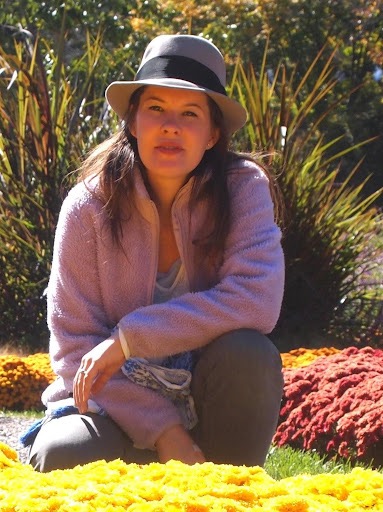
Andrea Echeverría Langsdorf is an Associate Professor at Wake Forest University. She earned her doctoral degree in Latin American Literature and Cultural Studies at Georgetown University. She is the author of Yeyipun en la ciudad. Representación ritual y memoria en la poesía mapuche (Editorial Universidad de Guadalajara, 2021) and El despertar de los awquis: migración y utopía en la poesía de Boris Espezúa y Gloria Mendoza (Paracaídas Editores & UNMSM, 2016), as well as of several academic articles published in journals such as Latin American and Caribbean Ethnic Studies, Latin American Research Review and the Canadian Journal of Hispanic Studies. She is currently working on a book that studies Mapuche visual art.
Apu Kolki Hirka © Macedonio Villafán Broncano
Selection, introduction, and translation from Spanish © Andrea Echeverría Langsdorf ~ Siwar Mayu, May 2026

 Hosted by UNC Asheville and the Diversity Action Council