Original poetry © Danilo Vásquez
Introduction, pictures and translation from Spanish © Christián González Reyes
If you prefer to read the PDF, please click HERE
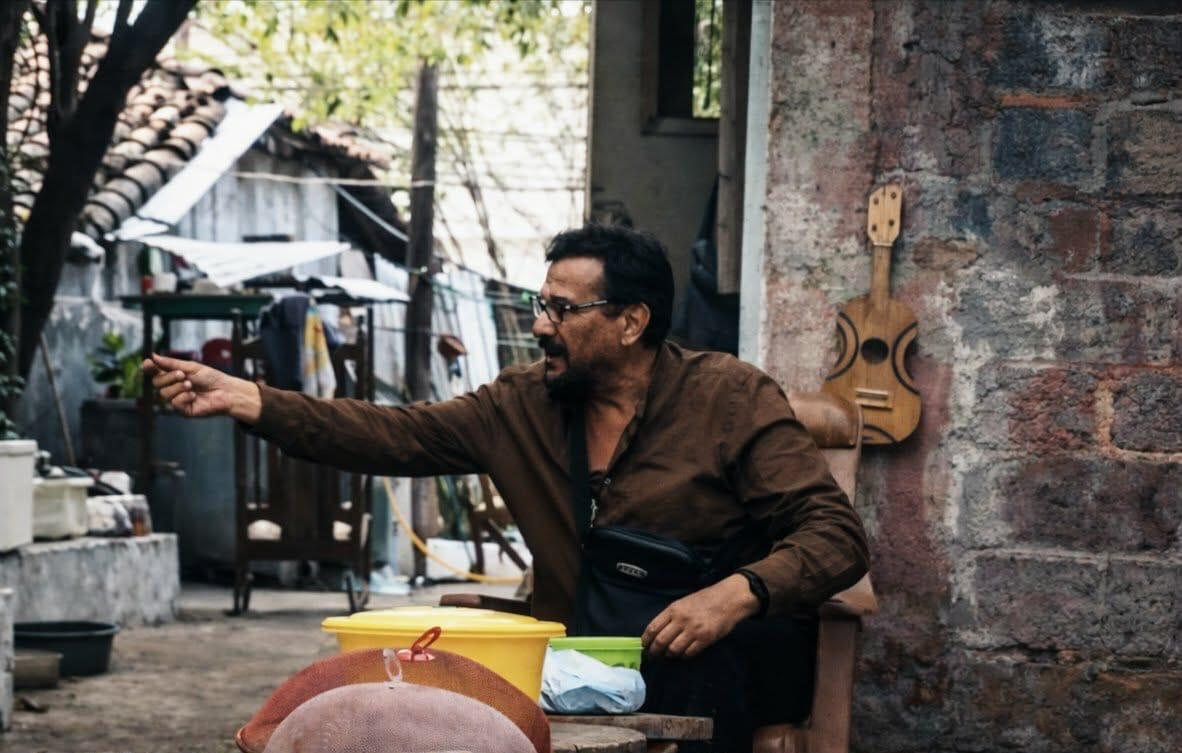
Danilo Vásquez (b. 1960) is a Lenca poet and teacher who was born in San Miguel, El Salvador. He received a Bachelor’s in Literature from the University of El Salvador. He resides in Santa Rosa de Lima where he teaches language and literature at Centro Escolar Centroamericana. His published writings include: El diablo en Santa Rosa de Lima (1987), Náuseas de Lemas y Dilemas (1988), Adiós a un ideal (1989), Cuentos de Santa Rosa de Lima (1989), Mamá abuela (1990), Cuando la luna llena (1992), Fragmentos de un sueño (1998), Cuba…una sílaba tras otra (1999), and Cuadernos lencas taulepas (2016).
The poems I have chosen to translate come from various places, such as his poemario Cuando la luna llena (1992) and Cuadernos lencas Taulepa (2016). For this reason, I have decided to “name” the following group of translated work “Poems from Lenca lands.” I have included the original poems in Spanish so readers are able to consult either the original or my translations into English. In his poems, readers will find an array of themes and ideals, many of which speak to a trans-American and Lenca experience.
Danilo Vásquez’s work has gone unnoticed by many readers and writers, which is of no surprise given the peripheral status that Central American authors have been afforded within Latin American literary and publishing spaces, as well as World Literature more generally. Amidst this reality, many Indigenous writers from Central America and Abya Yala have found ways to disperse their work in and outside of Latin America, particularly through Indigenous-led writing collectives and the Internet’s ability to connect millions of people across time and space. In Danilo’s case, much of his work is no longer under (physical) circulation, so the Internet has been an important avenue for the circulation of his poems from Lenca lands. He has turned to sites such as Instagram, Facebook, Scribd, and Twitter, among many others, in order to share his poetics with readers like us.
In Danilo’s work, readers will find the maneuvers and beauty that he deploys through his use of the Spanish language. As many Indigenous scholars and artists have pointed out, even though we produce in colonial languages, such as Spanish and English, we have made them our own, ultimately Indigenizing the languages. In deploying Spanish, Danilo is able to capture the tensions and beauty found currently in Lenca lands in order to advocate for and to convey the contributions Lenca writers have to the world of literature. In the poems I have included, Danilo’s words speak historically and culturally to a post-bellum El Salvador and the legacy of colonial violence found on Lenca lands, lands that are divided by what today are known as El Salvador and Honduras. The poems the reader will find below are filled with Lenca cosmovisions as well as preoccupations with international and transnational struggles and solidarity efforts. These culminate in a tapestry of Lenca words that seek to build connections across time and space with non-Lenca and Lenca peoples alike.
Lastly, I would like to dedicate these translations to Berta Cáceres, a Lenca activist who was murdered in Honduras for advocating for Mother Earth and for Lenca and Indigenous rights and autonomy. She was taken from us too soon, a decade ago on March 3, 2016. Danilo Vásquez has a poem on her power and sacrifice, titled “A Bertha Cáceres,” where he recounts how the Lenka people will keep fighting against the material injustices perpetrated by the nation-states that occupy Lenka lands (Honduras and El Salvador). In conversation with Danilo, he told me the following about her: “La magia y el amor de una incansable luchadora manifestado en su aguerrida lucha. Berta es el atavismo genealógico de las guerreras Comizahuales” (25 Jan 2026 via Whatsapp). Abrazos.
A Poem for Berta Cáceres
March 3, 2016
From Cuadernos lencas Taulepa (2016)
English translation originally published in Latin American Literature Today (2026)
We grieve for Honduras
Like the twin sister
Who suffers at the same time as the heart
We grieve
Because we carry a sea of blood that unifies us
Because for every thorn that wounds us
Grandparents
parents
And siblings bleed.
It breaks our soul
To know that foreign gunpowder
Keeps exploding in our mountains
Cowards
Murderers
How dare they spill our blood
Murderers
Forever dammed
The blood that dyed red
Our rivers wasn’t enough for them
Did they really think that the children of Manawana Lempira
won’t raise their spears?
Our arrows will be poisoned with dignity
With decorum
To combat the grim and crude invader
All the fury of the confederation
All the strategy and tactics
Will be felt in the vengeance for our spilled blood
Our fallen, heroic siblings
will be avenged one by one
The fight begins
The combativeness of the glorious Lenca will be felt
Even in the rotten and dirty bones of the transnationals.

From Cuando la luna llena (1992)
MONDAY
The rain has already washed the horizon
The night covers the earth with her cloth
A cricket sings desperate songs
An out-of-tune rooster plays along with him
Slowly the moon walks
Without knowing where to.
THURSDAY
And I will keep living
In each of the sun’s marimbazos *
Picking up the lost lights
Shaping the faces of the past
Walking hand in hand
With my existential dread
Crashing my full moon voice
Spilling the aged wine
On the comal of a dark town. **
~~~
* The Central-American marimba is a melodic percussion wooden instrument.
** The comal is a Central-American rounded earthenwear griddle where tortillas are cooked.
JANUARY
The words arrived
On old paper
And one syllable after another
Washed the antihistorical retina
And in the wide sky
The sea reflected an island
The path was named utopia
And hope walked
hand in hand with happiness
And a respectable and courageous people
That exists beyond the sea
Shouted at my heart
Two fiery syllables
CU-BA
JULY
I sense a decline
Like a bird
That loses its wings
After so much flying.
I picture a kid
Sitting at the bank
Of a river that was yesterday.
And I see a shadow
On the leaf of a tree
That was also yesterday.
Even so
I have the pleasure of the word and the smile.
Even if sometimes I feel
That they slip away from me
Like the shadow of what I was yesterday.
OCTOBER
I return and can’t find yesterday
Today
Tomorrow
Not even a single year
I look for
One syllable after another
Daring
Lucid
That spread
Liberty
Justice
Democracy
And beyond the sea
The Pope prays in Havana
And Cuba goes on
And lives
And will live forever.
NOVEMBER
Once
Upon a midnight
Liberty leaned out
Dressed up in daydreams.
Wrapped up on her horse
She rode through the grey forests
She opened grooves
Paths
And roads
That no one has traversed.
The route was so steep
That the night turned into
A long, long voyage.
Reality’s light
Kept awake consciousness’s dark cloak.
Stunned and a sleepwalker
And with the light on
I understood that life
Was a nightmare
Dressed up in daydreams
And that liberty was a horse
Full of grooves, paths, and roads.
DECEMBER
And in the goodbyes of a dream
I will pour out the water from my eyes
In order to wash the land of my ancestors.
I will open the door of the world
In order to draw songs
on the distant horizon of your life
And at the end of endings
Like the gazes
The words
The rivers
The hills
And like old fields
I must also wither away.
For more about Danilo Vásquez
- @poetadanilovasquez
- Danilo Vásquez as guest-speaker at Manzanita School, California.
- “Cuadernos lenkas”, El Escarabajo, 2026.
For more about the translator
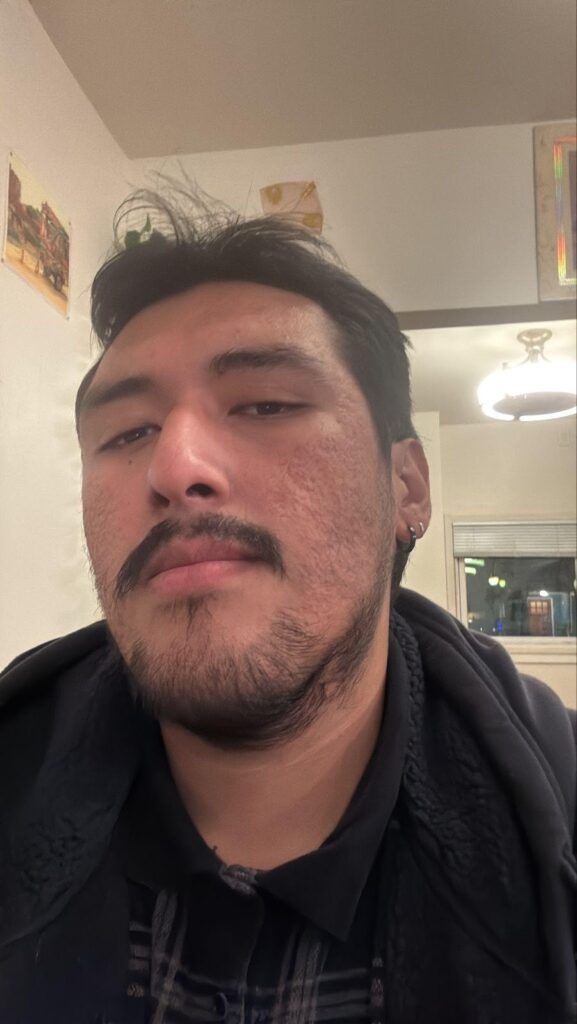
Christián González Reyes (b. 1997) (They/he) is a scholar and writer. Chrisitán is finishing a PhD in Comparative Literature at UC Berkeley, where they focus on Post-Civil War Central American, Mesoamerican, and diasporic literature and film. They are interested in the impact Marxism has had on these cultural archives. Christián is also a writer of short stories in Spanish, and they are currently finishing a book of short stories.
Original poetry © Danilo Vásquez
Introduction and translation from Spanish by Christián González Reyes ~
Siwar Mayu, March 2026
 Hosted by UNC Asheville and the Diversity Action Council